- Published 2026.11.06 14:45
Signs $9 billion AI infrastructure contract
Counts full capital contribution as debt, responds with demand-matched procurement
Cloud utilization and large customer wins are key metrics
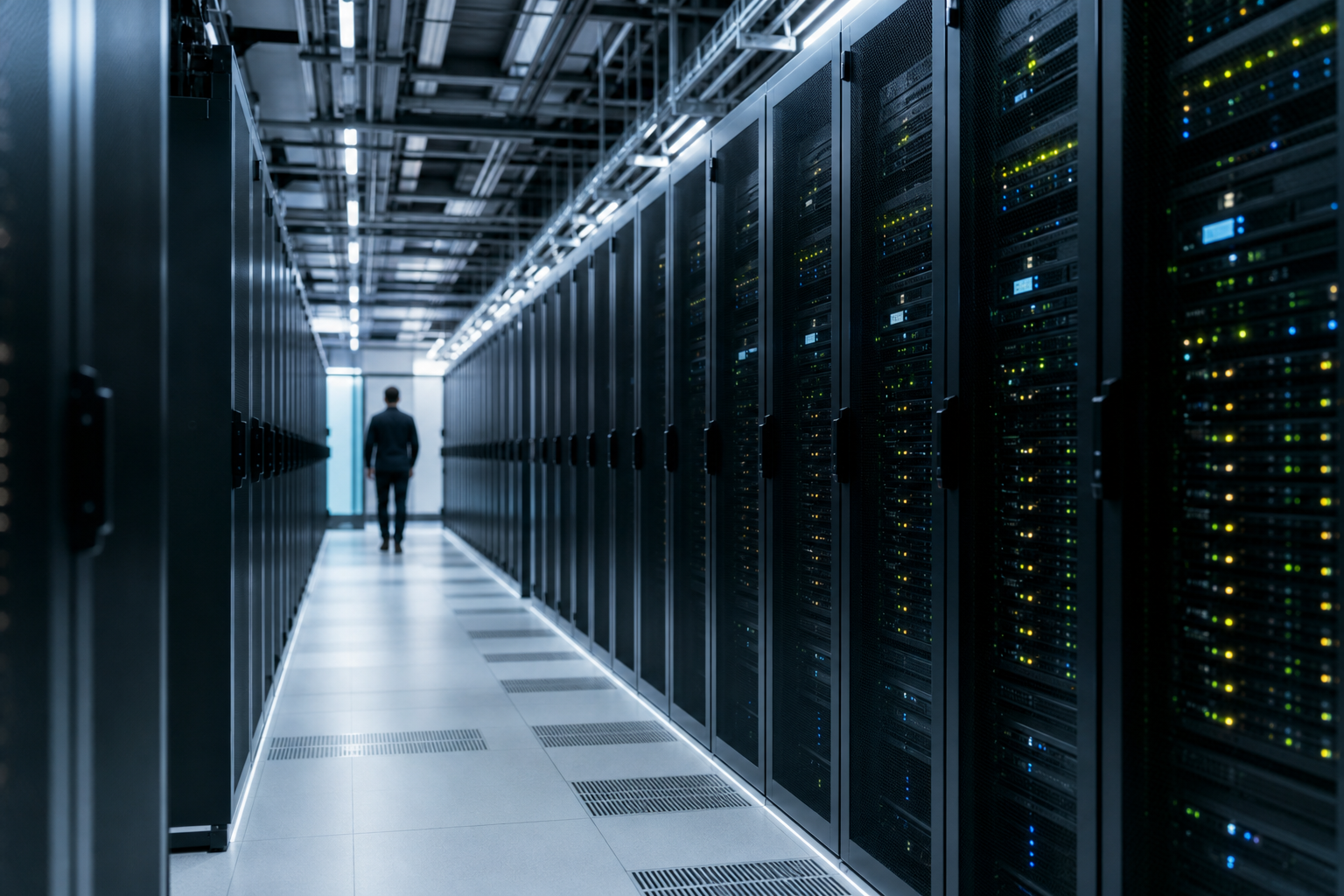
Naver has been recognized by S&P Global Ratings for the highest level of financial safety even after booking 12 trillion won (about $8.9 billion) in artificial intelligence (AI) infrastructure debt. At a time when large capital spending often leads directly to credit downgrades, Naver defended its financial risk by securing a buffer that allows it to delay equipment purchases based on customer orders, even while carrying the full amount of outside capital contributions as debt.
On Nov. 5, S&P announced that it maintained Naver's long-term issuer credit rating at 'A-' with a stable outlook. This contrasts with Meta's rating outlook being revised down to negative and Oracle's rating falling to 'BBB-', the lowest investment grade. The assessment reflected Naver's $9 billion (about 12 trillion won) AI factory infrastructure contract signed with alternative investment manager Brookfield on Oct. 27.
During the assessment, Naver's financial metrics deteriorated significantly. The $9 billion that Brookfield invested in special purpose company AssetCo is legally an equity investment. However, S&P included the full amount in adjusted debt because Naver Cloud pays equipment usage fees and parent company Naver provides payment guarantees exceeding 18 trillion won (about $13 billion), ensuring a certain recovery. As a result, there is a possibility that Naver's free cash flow could temporarily turn negative starting in 2027 as graphics processing unit (GPU) facility investment surges.
Nevertheless, the key reason Naver maintained the strongest 'minimal' financial risk profile is the high variability of its investment execution. Instead of purchasing equipment all at once, Naver signed a contract to sequentially procure equipment, starting with 55MW of operation in the first half of next year and reaching 200MW by 2028. The decisive defense was securing discretion to slow GPU imports or delay execution depending on long-term supply contracts with end customers.
Unlike traditional data center models that alone bear the depreciation of AI hardware and large borrowing risks, Naver's buffer structure—which realizes debt and assets sequentially only as customer demand is confirmed—eased the credit rating agency's concerns. As long as Naver holds the initiative in capital deployment and facility expansion, the analysis suggests that a surge in the debt ratio will not directly lead to a credit rating downgrade despite the massive nominal size of 12 trillion won (about $8.9 billion).
However, for this defense structure to remain effective, attracting large enterprise customers commensurate with the phased expansion targets must proceed without disruption. Even if delaying equipment imports avoids immediate liquidity risk, stalled infrastructure expansion could accumulate opportunity costs tied to long-term guarantees and fixed usage fees owed to AssetCo. Going forward, actual cloud utilization rates centered on data center GAK Sejong and the pace of securing global customers are expected to be key indicators of the A- rating's sustainability.
(Dollar figures are approximate, converted automatically at 1,000 won = $0.738, the rate on Nov. 8, 2026.)
※ This article is an AI translation of the Korean original published by Korea Credit News; it was checked by automated quality guards and published by the English edition desk.