
- Published 2026.11.06 14:30
Louisiana offers cheap land lease and 280 billion won in infrastructure support
At least 23 local lawmakers and officials signed NDAs, fueling resident backlash
Hyundai Steel’s plan to build a steel mill in Louisiana with an investment of over 8 trillion won (about $5.9 billion) has sparked controversy after the state government secretly provided a strikingly cheap land lease and hundreds of billions of won in public funds. As criticism grows that local politicians handed over massive taxpayer money behind closed doors to attract a large corporation, some observers say the company’s first eco-friendly steel production base in North America could face delays.
According to a social media post on Nov. 6 (local time) by The State of Freedom, a local conservative political group, the Louisiana state government has been criticized for providing massive public funds and land at a bargain price to attract the Hyundai Steel plant in Ascension Parish. In particular, the state government, the state Senate president and House speaker, and local officials reportedly signed non-disclosure agreements (NDAs) during the process and concealed the details.
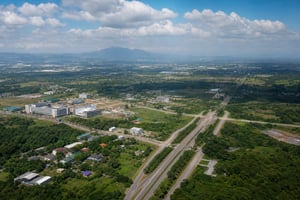
Hyundai Steel is investing $5.8 billion (about 8.12 trillion won) to build an eco-friendly electric arc furnace steel mill on a 1,700-acre (about 2.08 million pyeong) site in the Modeste area of Ascension Parish. A groundbreaking ceremony was held in September 2026 with Louisiana Governor Jeff Landry and Hyundai Motor Group Chairman Chung Euisun in attendance, and commercial production is targeted for 2029. The plant will serve as a forward base to supply steel plates needed for Hyundai Motor and Kia’s electric vehicle production in North America.
Behind the large-scale investment lies full support from the state government. According to Louisiana court records and complaints filed by civic groups, the state agreed to provide up to $200 million (about 280 billion won) to Hyundai Steel for land purchase and infrastructure construction costs. Hyundai Steel can lease the site for up to 99 years at $1 (about 1,400 won) per year, and after 32 years it has the right to buy the land for $99 (about 138,600 won). On top of that, tax breaks worth $1.2 billion (about 1.68 trillion won) were added.
Despite such extraordinary terms, the negotiation process was kept completely under wraps. It was later revealed that at least 23 people, including the Louisiana Senate president, House speaker and Ascension Parish officials, signed NDAs with Hyundai Steel, intensifying criticism of backroom dealing. The Ascension Parish government released related documents in September 2026, saying the confidentiality period had expired, but residents’ discontent has not subsided.
The opaque process drew strong backlash from the local community. Local environmental and civic groups, including the Louisiana Bucket Brigade, filed lawsuits against the state government. They pointed out that the state pushed through the agreement without proper approval from the bond commission or public hearings. Some local residents attended bond commission meetings and criticized that a company worth tens of billions of dollars should enter the state with its own funds without state tax support.
In response to the controversy, the state and local governments explained that the measures were unavoidable to attract investment. Ascension Parish President Clint Cointment said in a press release that without confidentiality, the parish would have been at a serious disadvantage in competing with other regions for high-wage jobs and economic opportunities. Hyundai Steel also tried to appease residents by touting a plan to create 1,300 permanent jobs.
Hyundai Steel is pushing through the controversy by highlighting the economic ripple effect on the local economy. To increase engagement with the community, the company held a groundbreaking ceremony in February 2026 for a training center with a $30 million (about 42 billion won) investment to operate a steel education program for local college students, and has begun full-scale construction.
(Dollar figures are approximate, converted automatically at 1,000 won = $0.738, the rate on Nov. 8, 2026.)
※ This article is an AI translation of the Korean original published by Korea Credit News; it was checked by automated quality guards and published by the English edition desk.