
- Published 2026.10.16 07:02
NO96 Super+ technology applied to two 174,000-cubic-meter vessels
Believed to be the 680 billion won order disclosed in September
Urgent need for Korean cargo hold commercialization amid 5% royalty structure
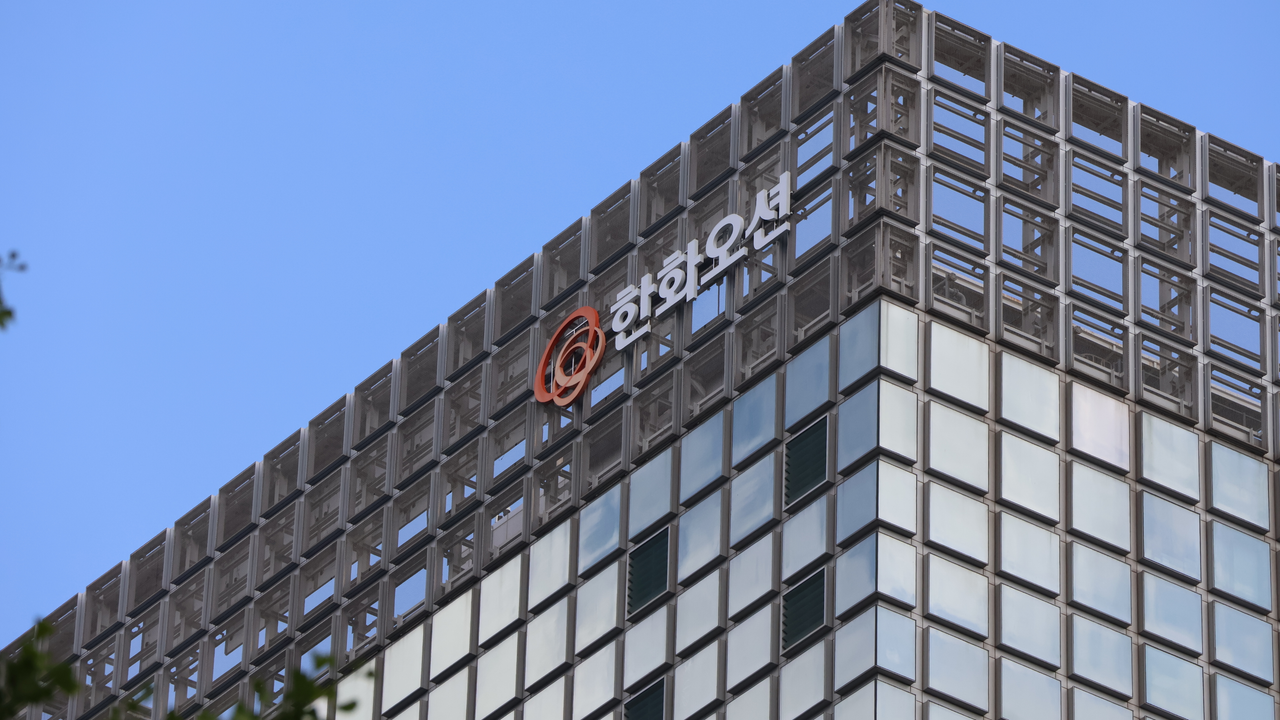
Hanwha Ocean has ultimately entrusted the cargo hold design for two liquefied natural gas (LNG) carriers ordered by an African shipowner in September to France's GTT. While the Korean shipbuilding industry leads the global LNG carrier construction market, the deal reaffirms its continued reliance on foreign companies for the core cargo hold technology.
According to GTT on Oct. 14 (local time), the company received an order from Hanwha Ocean in the third quarter of this year to design cargo holds for two 174,000-cubic-meter LNG carriers. The vessels will use GTT's membrane-type 'NO96 Super+' technology and are scheduled for delivery in the fourth quarter of 2029. The technology is characterized by enhanced insulation performance that reduces the boil-off rate of gas during voyages.
Industry sources believe this design order is the same project as the 680 billion won (about $502 million) order for two LNG carriers from an African shipowner disclosed by Hanwha Ocean on Sept. 28. The contract value disclosed at the time represents 5.3% of Hanwha Ocean's consolidated revenue from last year. The contract end date of November 2029 matches the delivery timing announced by GTT, and the vessel size is also the same global standard of 174,000 cubic meters.
This order clearly illustrates the chronic profit leakage structure facing the Korean shipbuilding industry. GTT effectively monopolizes the original technology for LNG carrier cargo holds, forcing Korean shipbuilders to pay royalties of about 5% of the vessel price to GTT for every LNG carrier they build. Considering that newbuild LNG carrier prices recently exceed 300 billion won per vessel, more than 15 billion won per ship flows directly to France.
To overcome this, the Korean government, Korea Gas Corporation, and the three major domestic shipbuilders jointly developed the Korean-style cargo hold 'KC-1', but design flaws such as icing problems led to its effective failure to commercialize. Development of the follow-up model 'KC-2' with improved insulation performance is currently underway, but it remains unclear when it can be applied to actual vessels.
Going forward, complete independence in cargo hold technology is essential for the Korean shipbuilding industry to secure high profitability. Beyond successful technology development, proving the stability and reliability of domestic cargo holds to conservative global shipowners will be the key point to watch for commercialization.
(Dollar figures are approximate, converted automatically at 1,000 won = $0.738, the rate on Nov. 9, 2026.)
※ This article is an AI translation of the Korean original published by Korea Credit News; it was checked by automated quality guards and published by the English edition desk.