

- Published 2026.10.11 07:12
Hungarian government signals punitive regulations after groundwater contamination found at SK On's Iváncsa plant
Dedicated supervisory agency to launch in January 2027, shifting from pro-business policies to punitive sanctions
Legislation to raise fine cap to 5 billion forints and possible full inspection of existing plants draw attention
Hungary, Europe's largest battery production base, will sharply raise the cap on fines imposed on large industrial facilities that cause environmental pollution to 5 billion forints (about 22 billion won). The move comes immediately after SK On's local battery plant was fined 100 million forints over groundwater contamination. With the new Hungarian government that took office after a change of power rolling back past pro-business policies and moving toward punitive regulation, cost and regulatory risks for Korean battery companies operating in the country have peaked.
Hungarian Prime Minister Péter Magyar announced on the 10th via social media that he will no longer tolerate pollution without consequences and will raise the fine cap for polluting companies to 5 billion forints. He also said the government will fully re-examine environmental impact assessments and permit conditions, and will establish a dedicated battery industry organization within the National Living Environment Supervisory Authority, which launches in January 2027, to strengthen monitoring.
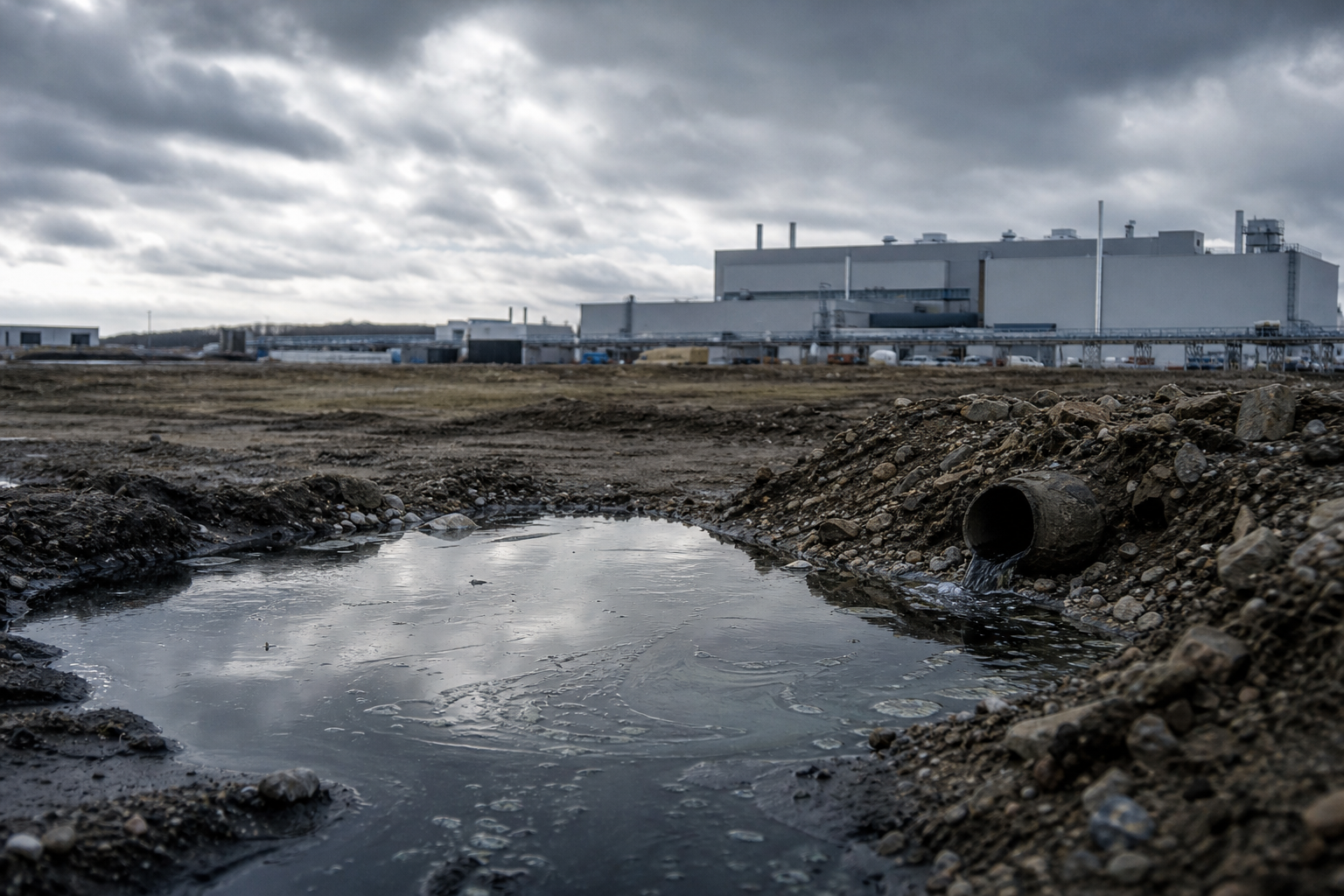
The direct trigger for the measure was a hazardous substance leak at SK On's Iváncsa plant in Hungary. According to local media, SK On was fined 100 million forints in September after N-methyl-2-pyrrolidone (NMP), an organic solvent used in battery manufacturing, was detected in a groundwater monitoring well at the plant. No hazardous substances were found in external private wells, but public sentiment worsened as the plant had already paid the same amount in fines in August for safety violations including worker nickel exposure. Hungarian labor unions and politicians have demanded punitive sanctions, saying the 100 million forint fine on a large company was nothing more than a slap on the wrist.
The increase in the fine cap is not a mere bluff but a structural shift reflecting changes in Hungary's political landscape. The previous government under Viktor Orbán, which ruled for more than a decade, attracted global battery companies such as Samsung SDI and SK On with unprecedented support including tax benefits and free land. But the Tisza government of Prime Minister Magyar, which won the recent election, has pledged to strictly control environmental and labor issues at battery plants.
The biggest change is the enhanced effectiveness of sanctions. Under the existing environmental fine system, critics consistently argued that even when companies earned huge profits, the statutory maximum fines were so low that paying fines was more advantageous than investing in environmental improvements. The Hungarian government's raising of the cap to 5 billion forints is 50 times the highest fine SK On has received. The newly launched National Living Environment Supervisory Authority plans to deploy about 50 so-called 'green watchdogs' to intensively crack down on illegal water use and unauthorized discharge of hazardous substances.
The tougher regulation directly burdens all Korean battery companies based in Hungary. In addition to SK On, Samsung SDI operates a large battery plant in Göd, and China's CATL is also building a large factory in Debrecen. These companies already face EU-wide regulations such as the battery passport system and carbon footprint tracking, and now they face a double burden from strong on-site regulation by Hungarian authorities at their production base.
Hungary's regulatory risk stands out even compared with competitors that have plants in other European countries. Hungary was previously classified as a country with loose environmental and labor regulations that was advantageous for lowering production costs, but this policy shift has largely offset that comparative advantage. Given the battery industry's heavy use of water and chemicals, surprise inspections by local environmental authorities or delays in permits could immediately lead to plant shutdowns or large fines.
The groundwater contamination at the Iváncsa plant is the first test case for gauging the Hungarian authorities' new regulatory standards beyond an individual company's mistake. When the fine cap increase will be legislated and implemented, and whether the new supervisory agency will launch a large-scale environmental inspection of existing battery plants immediately after its establishment, will be key indicators for estimating future regulatory costs for local operations.
※ This article is an AI translation of the Korean original published by Korea Credit News; it was checked by automated quality guards and published by the English edition desk.