
- Published 2026.10.11 07:11
Final results of CVD administrative review on 2023 exports published
Hyundai Steel kept at 1.28%, widening subsidy-rate gap between companies
Actual collection to begin through US customs 35 days after notice
The U.S. government has finalized countervailing duty (CVD) rates on Korean hot-rolled steel. POSCO will face a CVD of 3.68% and Hyundai Steel 1.28%, a factor that will weigh on the price competitiveness of Korean steel products exported to the United States.
The U.S. Commerce Department announced the final results of its 2023 administrative review of CVD on Korean hot-rolled steel in the Federal Register on Oct. 9 (local time). The review covered Korean hot-rolled steel imported from Jan. 1 to Dec. 31, 2023. The Commerce Department determined that Korean steelmakers received countervailable subsidies from their government during the review period.
The final net subsidy rates are 3.68% for POSCO and 1.28% for Hyundai Steel. In its preliminary determination announced in April 2026, the Commerce Department set POSCO's rate at 3.71%, but after receiving comments from interested parties it revised its subsidy calculation methodology and lowered the final rate by 0.03 percentage point. Hyundai Steel's rate was kept at the 1.28% calculated in the preliminary determination.
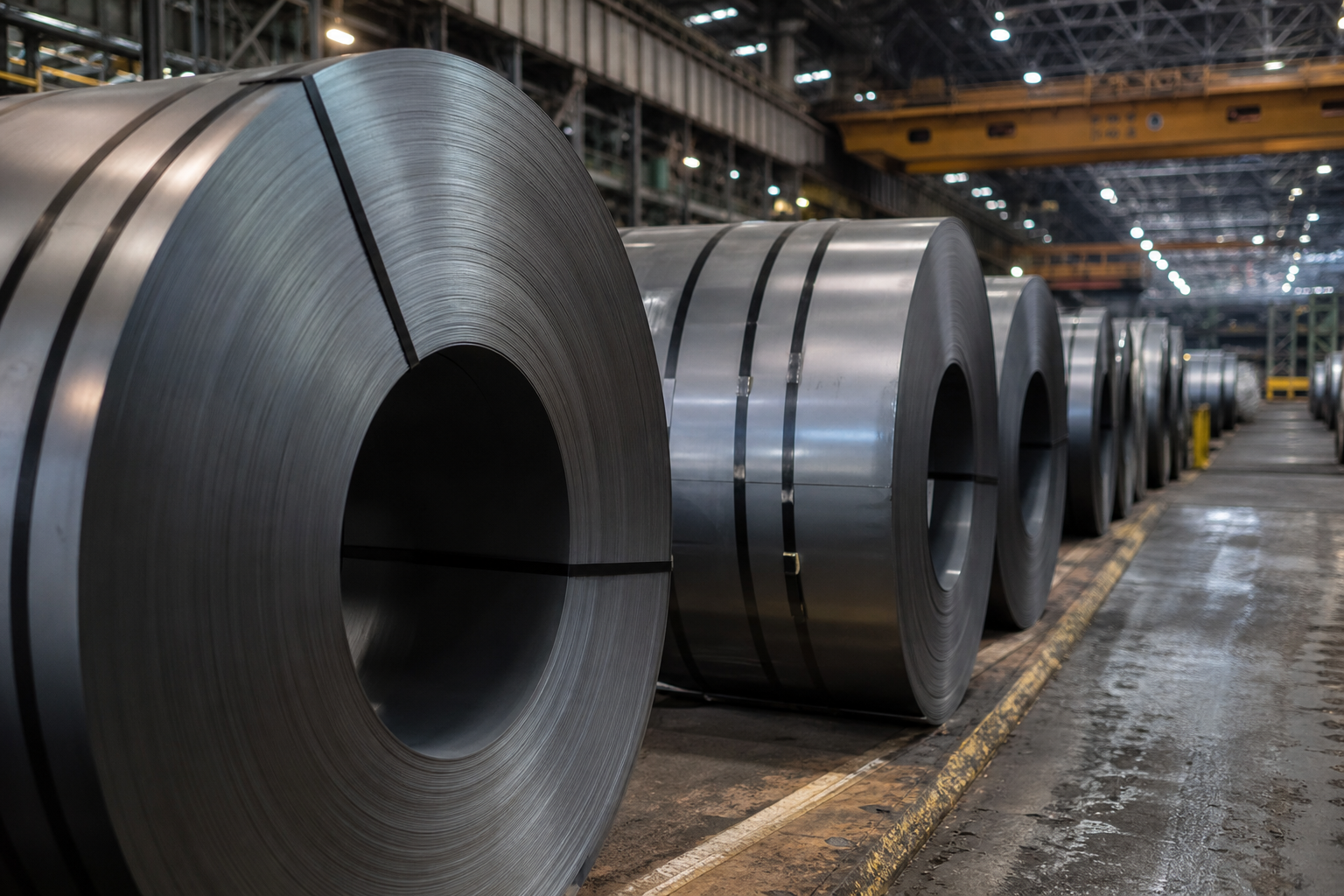
Hot-rolled steel is a thick steel sheet made by processing molten steel and is used as a basic material in various industries such as automobiles, construction and steel pipes. The United States imposes anti-dumping (AD) and countervailing duties on imported steel to protect its domestic industry. While anti-dumping duties prevent exporters from selling at unfairly low prices, countervailing duties are punitive tariffs imposed to offset unfair benefits when an exporting country's government provides direct or indirect subsidies such as electricity rate discounts or policy loans to companies.
With this decision, POSCO and Hyundai Steel, Korea's leading steelmakers, face an additional tariff burden in the U.S. market. The United States already applies quotas or additional tariffs on imported steel under Section 232 of the Trade Expansion Act, so the added CVD rates of 1-3% will inevitably raise local selling prices. In particular, POSCO received a subsidy rate about three times higher than Hyundai Steel, increasing its relative cost pressure.
Compared with the past, the review results showed diverging trends by company. For 2022 imports, the CVD rates finalized by the Commerce Department last year were 1.47% for POSCO and 2.21% for Hyundai Steel. In one year, POSCO's subsidy rate more than doubled while Hyundai Steel's fell by nearly half, reversing their positions. The perceived impact varies greatly by company depending on whether they are included in Korean government support programs or how the Commerce Department calculates its investigation targets.
With the final rates confirmed, U.S. Customs and Border Protection (CBP) will soon begin actual collection procedures. The Commerce Department plans to issue duty assessment instructions to CBP no earlier than 35 days after the final results are published in the Federal Register. Local importers will be required to pay cash deposits reflecting the new rates and will also go through settlement procedures for the difference from amounts previously paid.
Companies may still appeal to the U.S. Court of International Trade (CIT), claiming unfair duty calculations. In fact, the Korean steel industry has previously sued the Commerce Department over arbitrary subsidy calculations or the application of particular market situation (PMS) logic and obtained refunds of some duties. As the U.S. government's overt protectionist stance strengthens, a key question is whether this duty determination will serve as a benchmark for additional trade restrictions such as future annual anti-dumping reviews.
※ This article is an AI translation of the Korean original published by Korea Credit News; it was checked by automated quality guards and published by the English edition desk.