
- Published 2026.10.10 10:42
Preliminary approval secured in environmental review for 4 large Texas reactors
Large private power grid build-out targeting AI electricity demand gains momentum
Final safety review and integrated EPC contract remain key tasks
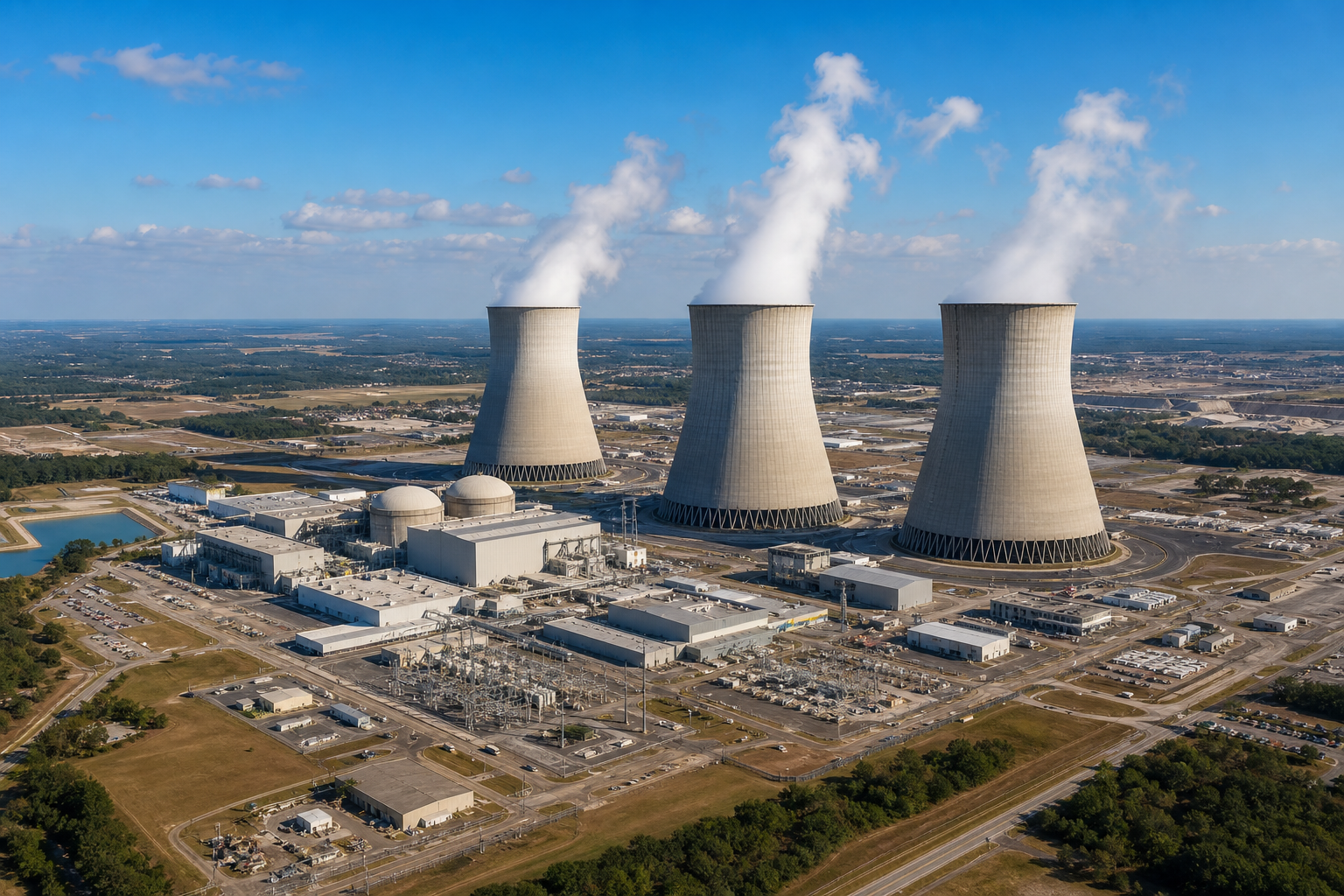
A project to build four large nuclear reactors in Texas, in which Hyundai Engineering & Construction is participating as a partner, has cleared the first environmental review hurdle with US regulators.
According to an announcement by project developer Fermi America on Oct. 9 and local disclosures, the US Nuclear Regulatory Commission (NRC) published a draft environmental impact statement in the Federal Register for Project Matador, which calls for four reactors in Carson County, Texas. NRC staff issued a preliminary recommendation in favor of issuing a combined license (COL) for the project.
The preliminary recommendation signals that a large private power grid project to support artificial intelligence (AI) data centers is picking up speed. In particular, the scope of work for Hyundai E&C, which is pursuing an integrated role covering design and procurement as well as construction, is expected to become clearer.
Project Matador is an 11-gigawatt (GW) hybrid energy campus that Fermi America is developing outside Amarillo, Texas. The core goal is to build a large private power grid combining four large nuclear reactors with gas-fired combined cycle and solar power facilities to meet surging AI electricity demand.
The nuclear portion will use four AP1000 pressurized water reactors from Westinghouse. Fermi America reached the draft environmental impact statement stage just 15 months after applying for a combined license to the NRC in June 2025. That is unusually fast given that US nuclear licensing reviews typically take years.
The speed reflects a new pilot program under which the applicant prepares the draft environmental impact statement directly under NRC oversight. Fermi America thanked key partners including Westinghouse and Hyundai E&C, noting that the licensing process is accelerating.
The licensing progress could lead to a substantial expansion of Hyundai E&C's actual scope of work. Hyundai E&C signed a memorandum of understanding (MOU) with Fermi America in July 2025 for the nuclear portion of Project Matador and has been deeply involved from the front-end engineering design (FEED) stage.
The two sides are pursuing an integrated engineering, procurement and construction (EPC) turnkey approach for the final contract. If the integrated model is confirmed, the project size and profitability would improve significantly compared with a construction-only role.
With the US nuclear construction supply chain dormant for a long period, Hyundai E&C's construction capabilities—demonstrated by the successful completion of four reactors at the Barakah nuclear plant in the United Arab Emirates—are a key competitive advantage for the developer. Fermi America has also cited Hyundai E&C's construction ability and on-time delivery record as essential to rebuilding the US nuclear ecosystem.
However, the draft environmental impact statement does not mean final licensing approval. Even after the NRC staff's preliminary favorable recommendation, the final environmental review report must be confirmed following public comment. A separate safety review of the reactor design and operating procedures also remains, and only after all reviews are complete and the NRC commissioners hold a final vote can actual construction begin.
US government financial support is another major variable in the project's success. The US Department of Energy (DOE) has launched a $17.5 billion loan program to revive the nuclear project ecosystem. If government loan support is finally approved, bulk purchases of long-lead critical equipment would become possible, further reducing the project's financial uncertainty.
The most immediate task is the timing of Hyundai E&C's final contract. The original post only noted progress in the licensing process and did not mention any new contract or specific change in Hyundai E&C's role. As the final licensing process gains speed, the two sides must sign a binding integrated EPC contract specifying design and procurement roles for the project to translate into actual revenue for Hyundai E&C.
※ This article is an AI translation of the Korean original published by Korea Credit News; it was checked by automated quality guards and published by the English edition desk.