
- Published 2026.10.10 10:40
White House senior adviser Peter Navarro alleges illegal transshipment of Korean steel, warns of sanctions
Hyundai Steel's Louisiana mill, which broke ground in September with 8 trillion won, faces rising cost burden
Korean government disputes demand surge claim; further Section 232 action is key variable
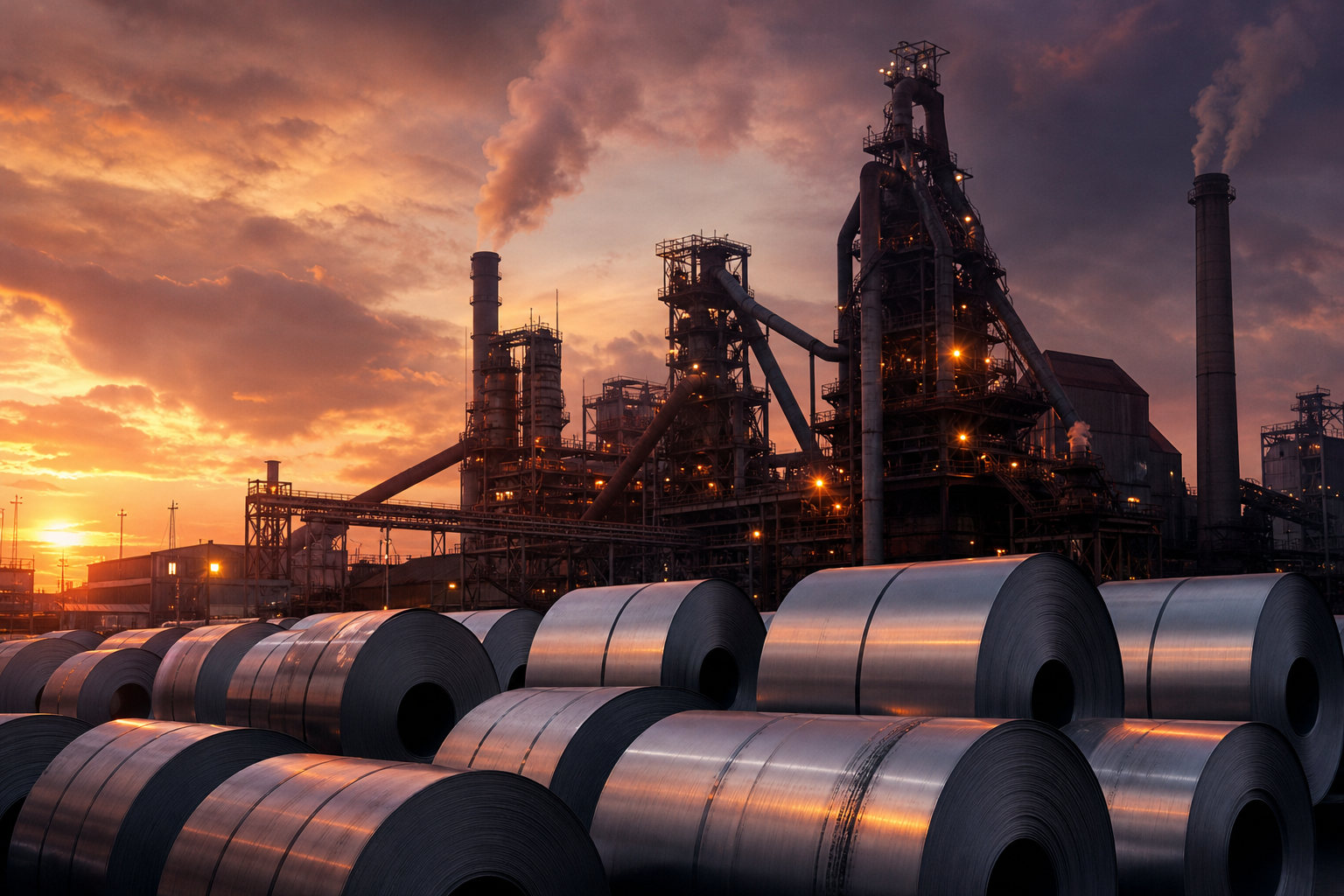
Peter Navarro, senior adviser for trade and manufacturing at the White House, singled out Korean steel, alleging illegal transshipment and subsidies, and warned of strong additional trade measures. The move is expected to weigh heavily on Korean steelmakers' US businesses, including the $5.8 billion (about 7.8 trillion won) Hyundai Steel and POSCO Louisiana steel mill project that broke ground in September.
Navarro recently said on social media platform X (formerly Twitter) and in local media interviews that Korea is "flooding the US with heavily subsidized steel and Chinese transshipped steel."
He noted that the current 50% steel tariff has failed to curb rising imports, adding, "They are cheating, and we are going to crack down."
Additional sanctions by the US administration based on Section 232 of the Trade Expansion Act are expected to materialize. Section 232 allows the US president to raise tariffs or restrict import volumes on products deemed to threaten national security.
The remarks are seen as an extension of the US administration's recent stance of classifying Korea as a "tier-one risk country" for transshipment of Chinese goods. In a report released in August, the US claimed that China has built a transshipment network using 40 locations worldwide to evade high US tariffs, naming Korea as a major transit point.
Navarro's hardline comments are likely to pose a direct risk to the large integrated steel mill that Hyundai Steel and POSCO are building in the US.
In September, the two companies held a groundbreaking ceremony for Hyundai-POSCO Louisiana Steel (HPLS), an electric arc furnace-based integrated steel mill in Louisiana with an investment of $5.8 billion. Led by Hyundai Steel with POSCO holding a 20% stake, the project aims to begin commercial production in 2029 and produce 2.7 million tons of automotive steel sheet annually.
The preemptive investment for entering the US market has hit a wall of deepening trade barriers. In the local steel market, competitors such as US Steel have already started operating electric arc furnace plants, and new supply in North America is estimated to reach about 10 million tons this year alone. Amid oversupply concerns, the protectionist stance for domestic industry adds to business uncertainty even before completion.
There is also a risk of higher tariffs on Korean equipment and materials to be used at the plant. In September, the Korean government officially asked the US to ease tariffs on equipment and materials needed by Korean companies building factories in the US, but the latest remarks make such benefits unlikely, according to assessments.
The Korean government and steel industry say the US administration's claims are unfair. They argue that steel exports expanded naturally as demand grew with the rapid growth of related industries in the US, such as artificial intelligence (AI) data centers, and that illegal transshipment or unfair subsidies are not true.
In fact, the prevailing analysis is that Korean steel exports to the US increased because local customers continued to buy despite high tariffs, as US steel prices remained high. However, the combination of local political calculations and protectionism is expected to keep pressure on Korean steel for the time being.
Whether the US administration specifies product-specific import quota restrictions or tariff increases based on Section 232 within this year will be a key variable. In addition, whether the US Commerce Department grants exceptional tariff exemptions or reductions for key Korean equipment needed for the Louisiana mill construction will be a practical yardstick for the project's profitability.
※ This article is an AI translation of the Korean original published by Korea Credit News; it was checked by automated quality guards and published by the English edition desk.