

- Published 2026.10.09 14:02
22,524 ID.4 EVs recalled in the United States
Thermal runaway risk above 80% charge prompts temporary charging limit
SK On batteries involved; cause and liability to set the tone going forward
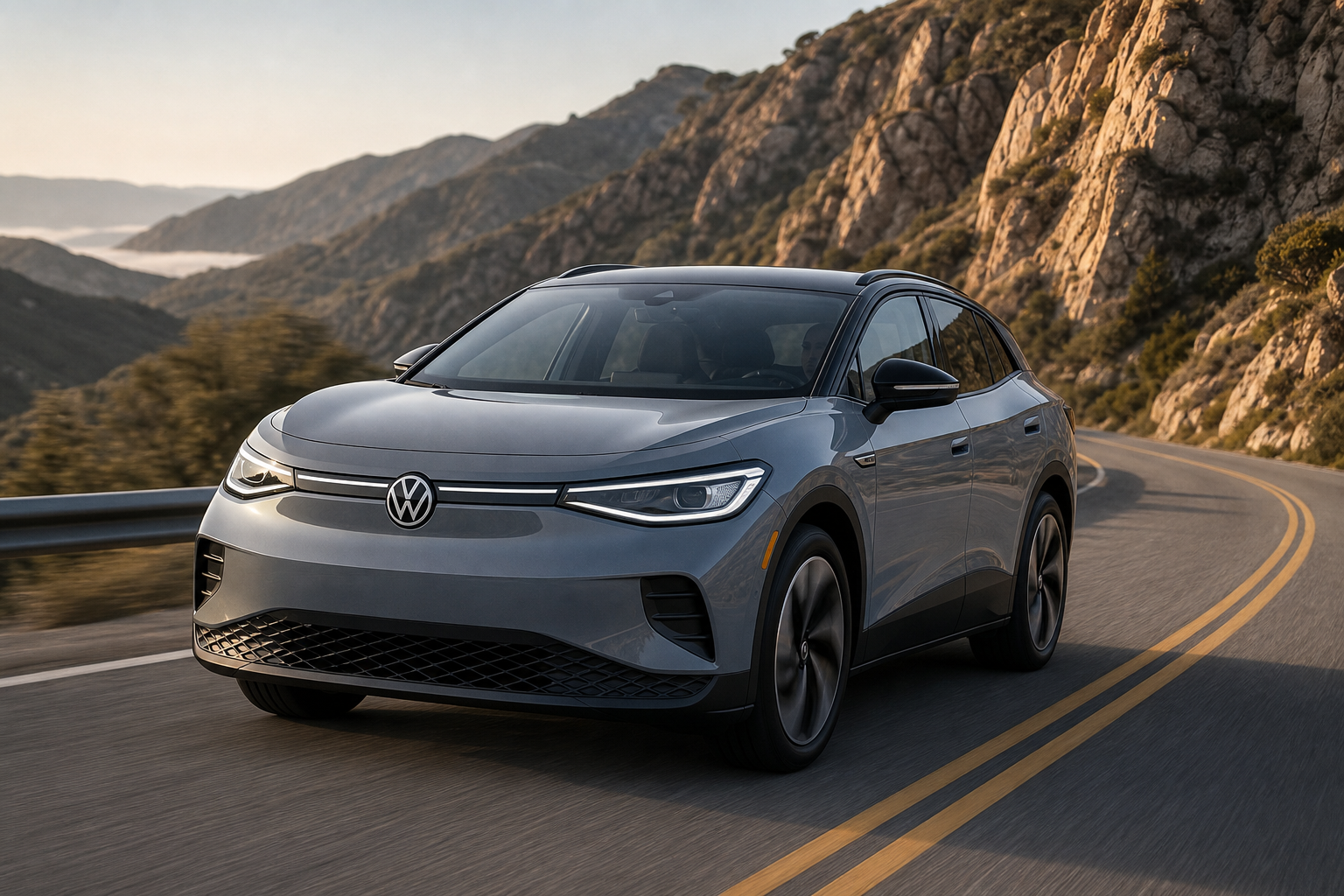
Volkswagen is voluntarily recalling 22,524 units of its ID.4 electric vehicle in the United States over concerns of battery thermal runaway. A high-voltage battery defect that could lead to fire has been found, but the automaker has yet to identify the root cause or a repair. Volkswagen has told owners to temporarily limit battery charging to 80% and has asked battery supplier SK On for further explanation.
According to the National Highway Traffic Safety Administration (NHTSA) on Oct. 9, Volkswagen reported the recall on Sept. 30 for some 2023–2026 ID.4 EVs sold in the United States. The recall campaign number is 26V630, and Volkswagen's internal recall number is 93EX.
The defect report shows that in affected vehicles, thermal runaway can occur when a specific charging profile is combined with a battery state of charge above 80%. Thermal runaway is a chain reaction in which one battery cell overheats and heat rapidly spreads to neighboring cells, potentially causing a vehicle fire. The estimated proportion of recalled vehicles that actually have the defect is about 0.1%.
Volkswagen said it received 22 related claims in the United States between Jan. 18, 2024 and Aug. 7, 2026. After detecting initial signs of the defect, the company began field investigations in June on vehicles not included in previous recalls, but has not determined the exact cause of the fires. With no fundamental fix yet available, Volkswagen decided on a voluntary recall on Sept. 23.
This is not the first battery-related recall for the Volkswagen ID.4. Early this year, Volkswagen recalled nearly 100,000 EVs worldwide, including about 44,000 2023–2025 ID.4 models in the United States alone over battery overheating. The latest recall covers a separate group of vehicles not included in the earlier campaign after additional defects were found. The repeated battery problems are eroding confidence in the quality of Volkswagen's EVs.
The biggest issue is that there is still no final repair method. As a temporary measure, Volkswagen has advised owners to limit charging to 80%. It plans to attach recall notice stickers or use over-the-air (OTA) software updates to enforce the 80% charging cap. Owners will have to accept a nearly 20% reduction in driving range per charge for the time being because they cannot use the battery's full capacity.
The blame could spread to battery supplier SK On. The high-voltage batteries in the recalled vehicles were produced at SK Battery America's Georgia plant, the U.S. subsidiary of SK On. According to the defect report, Volkswagen's product safety committee formally asked SK Battery America last month for additional explanation on the battery production process and when the problem was resolved. No details on the progress of the cause investigation or whether SK On has responded have been disclosed.
Liability for the two companies will depend heavily on whether the defect stems from a manufacturing problem in the battery itself or from a vehicle-side system error such as Volkswagen's battery management system (BMS). If the investigation confirms a manufacturing defect in the battery cells, SK On will inevitably face a large share of recall costs as well as damage to its credibility in the competition to secure automaker customers. Volkswagen plans to send the first interim recall notice to owners on Nov. 27, and the timing of the cause determination and final repair announcement will be a key point to watch in assessing the two companies' liability.
※ This article is an AI translation of the Korean original published by Korea Credit News; it was checked by automated quality guards and published by the English edition desk.