

- Published 2026.09.30 13:16
Carbon nitride additive improves ion mobility in thick electrodes
High-rate discharge capacity up 165%... pouch cell lifespan also enhanced
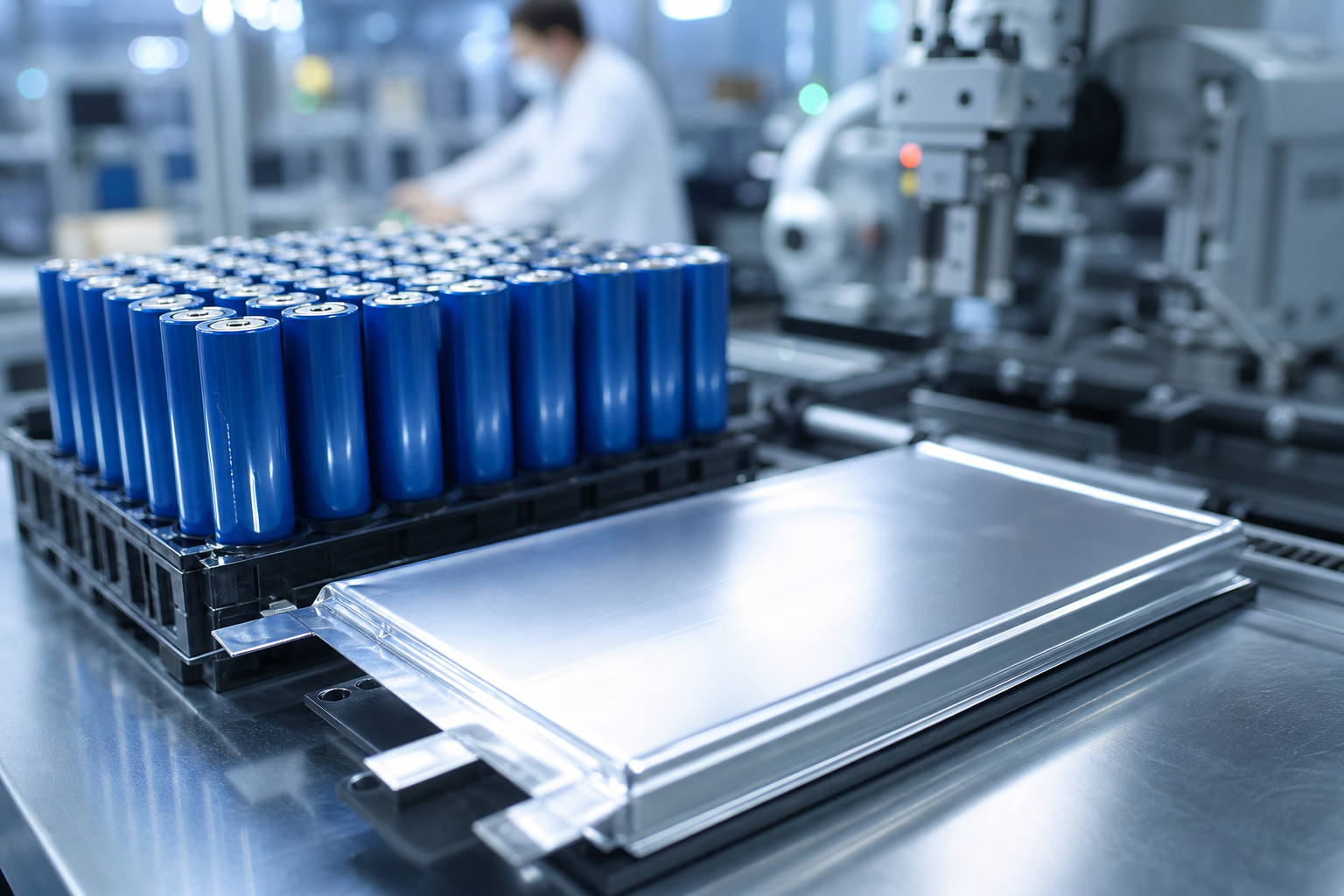
The Korea Research Institute of Chemical Technology (KRICT) has developed an electrode technology that can dramatically improve the performance of high-capacity batteries for long-range electric vehicles.
A research team led by Drs. Moon Sang-jin and Seok Jung-don at KRICT said on Sept. 30 that it has developed a dry thick-electrode technology using carbon nitride (g-C3N4) as a cathode additive. The study was conducted jointly with Seoul National University, Yonsei University and Thermo Fisher Scientific Korea.
To make high-capacity batteries, electrodes must be thickened to hold more energy-storage material. However, thicker electrodes cause a 'lithium-ion traffic jam' in which lithium ions cannot move smoothly into the deep interior, degrading performance.
To solve this problem, the team used porous carbon nitride as a 'lithium-ion guide.' Nitrogen atoms on the carbon nitride surface repeatedly trap and release lithium ions, helping them enter the cathode active material more easily.
As a result, the activation energy required for lithium-ion charge transfer fell 56% from 49.8 kJ/mol to 22.1 kJ/mol. The porous structure of carbon nitride also helped the electrolyte penetrate the electrode well, making the lithium-ion distribution uniform.
A dry thick electrode about 68 μm thick with 0.5% carbon nitride showed a 165.9% increase in discharge capacity under 3C high-rate discharge conditions, from 58.8 mAh/g to 156.2 mAh/g. Power density also rose by up to 2.85 times.
In tests with pouch-type full cells (batteries in finished form), capacity retention after 600 charge-discharge cycles improved to 81.3% with carbon nitride, compared with 72.9% for electrodes without the additive.
The team noted, however, that excessive carbon nitride content can lower electrical conductivity and increase electrode resistance, so optimization is needed. The study did not directly measure actual mass-production yield or manufacturing cost savings.
The findings were published as the cover paper of the August 2026 issue of the international journal Exploration.
※ This article is an AI translation of the Korean original published by Korea Credit News; it was checked by automated quality guards and published by the English edition desk.