- Published 2026.11.09 09:38
September mortgage rate hits 4.88%, highest in 14 years
Rising spreads squeeze vulnerable borrowers
New delinquencies surge, urgent need for preemptive asset quality measures
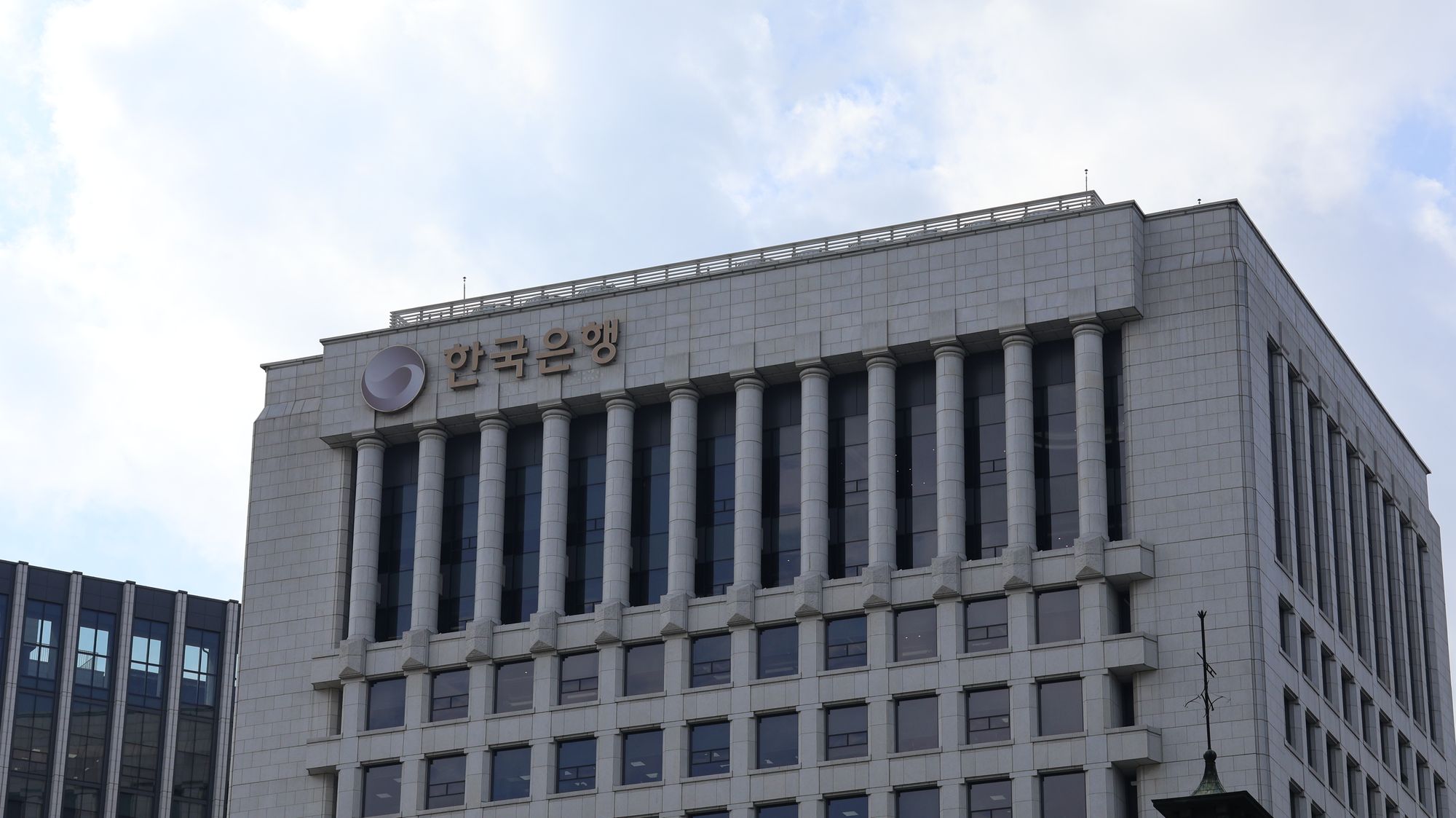
Even though the Bank of Korea's base rate has stayed at 3.00% per annum, lending rates on the ground are climbing steeply and squeezing borrowers' repayment capacity. When the base rate is frozen, funding costs should stabilize and the rise in lending rates should ease, but commercial banks have instead raised their spreads and sharply reduced preferential rates in line with the financial authorities' stance on managing the total volume of household debt. With the pause in monetary policy having no effect and the shock of high rates concentrated on ordinary and small borrowers, a distorted structure is taking hold in which bank lending rates and delinquency rates are both at their highest levels in about a decade.
According to the weighted average interest rates of financial institutions for September released by the Bank of Korea on Oct. 29, the average rate on new mortgage loans at deposit banks stood at 4.88% per annum, up 0.22 percentage point from 4.66% in August and the highest since April 2012, a span of 14 years and five months. In particular, fixed-rate mortgage loans, whose benchmark rates and spreads both rose, climbed for the 12th consecutive month to 5.11%, breaking above the 5% level for the first time since the statistics were first compiled in January 2013. Even unsecured credit loan rates are approaching 7% per annum, pushing the principal and interest burden on borrowers far beyond what they can bear.
Even policy finance that claims to protect ordinary people is seeing its defenses crumble. The Korea Housing Finance Corporation said on Nov. 9 that it will raise the rate on Bogeumjari Loan, its policy mortgage for ordinary borrowers, by 0.10 percentage point to 5.00–5.30% per annum for the Akeum e-Bogeumjari Loan. This is the first time the 10-year rate has entered the 5% range since the product was launched in March 2014. Policy mortgages are supposed to provide a long-term fixed-rate safety net for actual homebuyers seeking to avoid the high rates of commercial banks, but by raising the threshold of the public safety net, citing deterioration in mortgage-backed securities issuance rates and funding conditions, the authorities have left vulnerable borrowers with no alternative.
This reversal in rates has immediately led to a surge in delinquency rates. According to data on won-denominated loan delinquency at domestic banks released by the Financial Supervisory Service on Oct. 23, the proportion of loans with principal or interest overdue by at least one month stood at 0.69% as of the end of August, the highest since October 2016, a span of nine years and 10 months. The delinquency rate on loans to small and medium-sized enterprises facing weak domestic demand and rising costs jumped 0.09 percentage point from the previous month to 1.00%, with small and medium-sized corporations at 1.10% and individual business owners at 0.86%. Among household loans, the delinquency rate on other household loans, including unsecured credit loans that are directly exposed to rate shocks because they lack collateral, rose to 0.91%, reaching a dangerous level.
This spread of non-performing loans stems not just from individual borrowers' funding difficulties but from structural flaws in the financial system. Variable-rate loans, which account for more than half of new mortgage loan balances in Korea, pass the entire cost of rate increases on to households. Households that have to pay hundreds of thousands of won more in interest each month reduce consumption, which in turn leads to a sharp drop in revenue for self-employed business owners and SMEs and further loan defaults—a typical vicious cycle.
Financial authorities say the August delinquency rate is below the pre-COVID 10-year long-term average of 0.78% and therefore manageable, but this may be an illusion created by the indicator. In fact, new delinquencies in August alone reached 3 trillion won (about $2.2 billion), while banks disposed of only 1.5 trillion won (about $1.1 billion) in non-performing loans through write-offs and sales, meaning delinquencies are accumulating twice as fast as they are being cleaned up. The risk is that the essence of the problem has not been resolved but is merely hidden behind the statistics.
Banks are criticized for easily raising spreads under the pretext of the authorities' curbs on household lending and enjoying record interest income while ignoring the increased repayment burden on borrowers. The so-called 'passing the bomb' type of liquidity support, which simply extends the maturity of debts of borrowers who have lost their ability to repay, could come back as a burden of loan-loss provisions for the entire financial sector in the future.
To defend against non-performing loans across the financial sector, fundamental credit soundness management is urgently needed beyond simple maturity extensions. The appropriateness of the spread calculation system should be reviewed, and sophisticated debt restructuring that reflects repayment capacity as well as mandatory preemptive loan-loss provisioning should be introduced. If the market structure in which only lending rates rise while the base rate is frozen is left unattended, the domino effect of delinquencies starting from vulnerable groups will inevitably spread into a full-blown credit crisis.
(Dollar figures are approximate, converted automatically at 1,000 won = $0.738, the rate on Nov. 9, 2026.)
※ This article is an AI translation of the Korean original published by Korea Credit News; it was checked by automated quality guards and published by the English edition desk.