- Published 2026.11.09 11:45
- Updated 2026.11.09 11:53
Average credit score for new household loans hits 928 in September, rising for sixth straight month
Internet-only banks trail commercial banks by just 1 point as they focus on asset soundness
Even non-bank lenders cut loans, raising concerns over deepening polarization and funding crunch for vulnerable borrowers

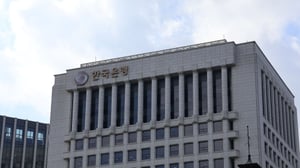
The Korean government eased aggregate household loan limits for banks in August 2026, citing a shortage of loan supply, but first-tier lenders are shutting their windows even more tightly to mid-to-low credit borrowers. Faced with deteriorating asset soundness, banks are using the relaxed limits only to fill their books with safe assets centered on ultra-high credit borrowers rather than supplying new credit to vulnerable groups, creating a paradox where the regulatory easing is accelerating credit polarization and borrower exclusion in the market.
According to disclosures on the Korea Federation of Banks (KFB) consumer portal on Nov. 9, the average Korea Credit Bureau (KCB) credit score of borrowers who took out new household loans (including mortgage loans) from 13 Korean banks (KB Kookmin, Shinhan, Hana, Woori, NongHyup, iM, Busan, Kyongnam, Kwangju, Jeonbuk, Kakao, Toss, and K bank) in September was 928. That is up 2 points from 926 in August and marks the sixth consecutive monthly increase since April. On a 1,000-point scale, a score of 900 or above corresponds to the top 1–2 grades under the old rating system, the highest-quality prime borrower segment. Yet an abnormal credit inflation has now become entrenched, where even borrowers with scores around 900 find it difficult to clear the first-tier lending threshold.
In particular, thresholds at regional banks and internet-only banks—whose main mandates were financial inclusion for mid-to-low credit borrowers and supply of credit to local working-class households—have risen steeply. The average credit score at the three internet-only banks—Kakao, Toss, and K bank—jumped to 943 in September. That is a surge of 12 points in eight months from 931 in January, reaching a level virtually indistinguishable from the 944 average at the five major commercial banks. This contrasts with the five major commercial banks (KB Kookmin, Shinhan, Hana, Woori, and NongHyup), whose average credit score edged down from 947 in January and has since stagnated. The result is that even internet-only banks, which were licensed on the condition of expanding credit to mid-credit borrowers, are now focused on attracting prime borrowers.
The five regional banks (iM, Busan, Kyongnam, Kwangju, and Jeonbuk) are in the same situation. Their average credit score for new loans in September was 903, up 8 points from 895 in January and breaking through the 900 mark. The intermediate financial ladder that borrowers excluded from large banks used to climb has effectively disappeared.
The reason banks are locking their lending gates even tighter is the steep rise in delinquency rates. At the end of the third quarter, the household loan delinquency rate at the five major commercial banks was 0.33%, up only 0.03 percentage point from 0.30% a year earlier, but the average at the five regional banks surged 0.26 percentage point to 1.23%. As nonperforming loans accumulate amid the regional economic slump and prolonged high interest rates, banks urgently need to defend their soundness indicators, so they are reducing the share of vulnerable borrowers and tightening new credit screening around safe collateralized loans.
This defensive behavior by banks is fueling the side effect of shifting credit risk outside the financial system. Mid-credit borrowers with scores in the 800s and multiple-debt borrowers who are pushed out of first-tier lenders have no choice but to turn to non-bank lenders or private lenders, but non-bank lenders such as savings banks and credit card companies are also slashing new loans due to rising funding costs and deteriorating asset soundness. Even marginal borrowers whose repayment capacity has not collapsed now face a growing risk of being trapped in high-interest private lending.
Criticism of the policy's effectiveness is also hard to avoid. Authorities eased aggregate limits saying they would open up lending, but in the absence of detailed credit supply incentives for financial institutions or measures to cushion soundness shocks, the relaxed capacity is simply being absorbed by asset-rich borrowers refinancing their loans. In the Bank of Korea's loan behavior survey released on Oct. 26, domestic banks' attitude toward household lending in the fourth quarter is expected to tighten further. As long as commercial banks continue to weed out borrowers in the name of soundness management, whether the funding crunch for financially vulnerable groups will be resolved remains unclear.
※ This article is an AI translation of the Korean original published by Korea Credit News; it was checked by automated quality guards and published by the English edition desk.