
- Published 2026.11.09 17:53
Processes 100-billion-parameter LLMs at ultra-low power under 5W
Prototypes ship in March next year, targeting on-device markets like robots and appliances
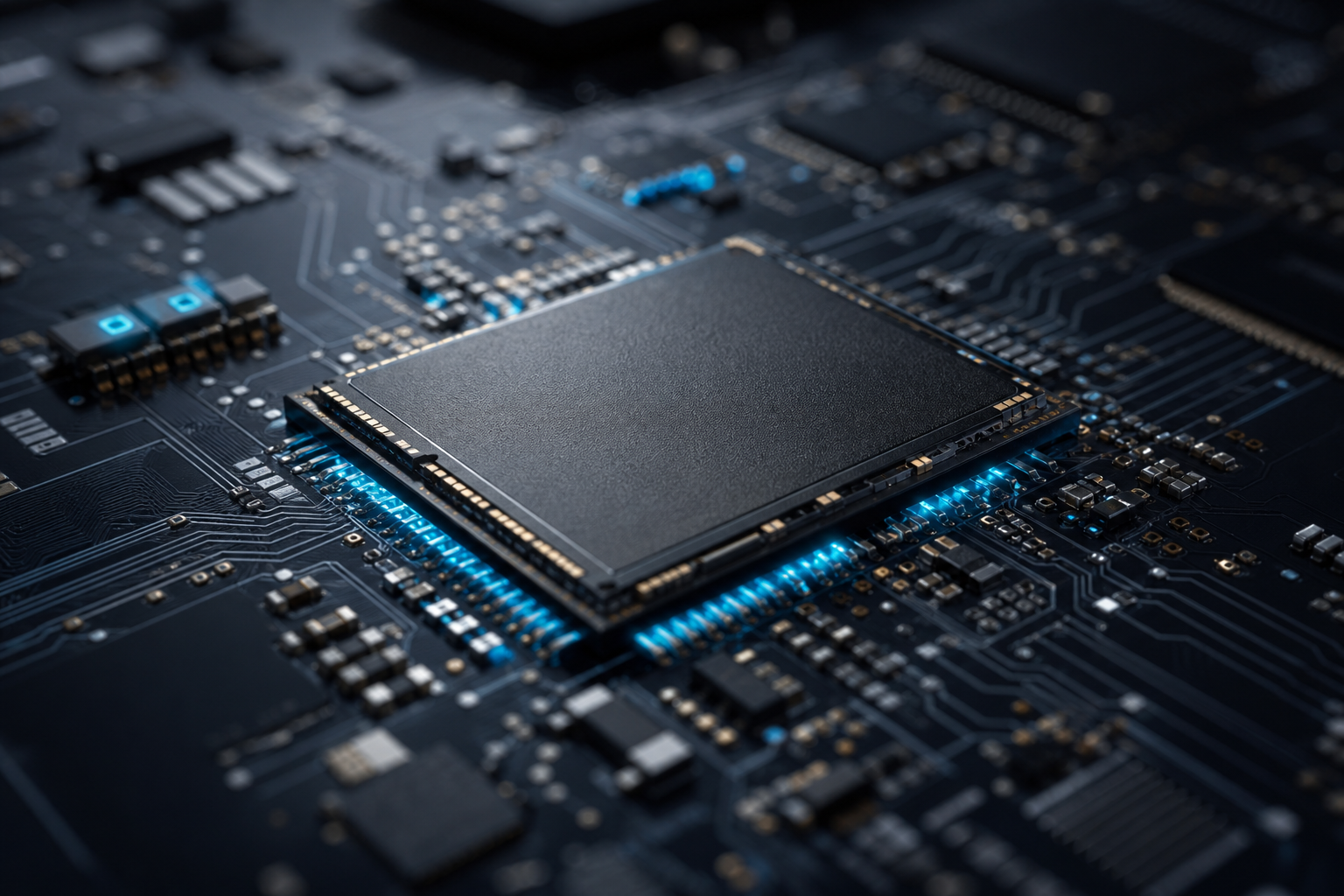
DeepX, a specialist in on-device artificial intelligence (AI) semiconductors, has completed the design (tape-out) of its next-generation chip using Samsung Electronics' foundry 2-nanometer (nm) process and next-generation processing-in-memory (PIM) technology. The company has entered a key stage in building 'physical AI' infrastructure by bringing massive AI computation that once relied on the cloud into devices themselves.
According to EE Times, a U.S. electronics industry publication, on Nov. 9, DeepX has completed the tape-out of its second-generation AI semiconductor 'DX-M2', capable of running a large language model (LLM) with 100 billion parameters. Tape-out refers to the final stage before mass production, when the semiconductor design is completed and handed over to a foundry (contract manufacturer). DeepX plans to secure DX-M2 prototypes in March next year and begin full-scale mass production in the fall of the same year.
The biggest feature of DX-M2 is that it maximizes power efficiency by combining Samsung Electronics' most advanced manufacturing process and memory technology. By applying Samsung foundry's 2nm gate-all-around (GAA) process, it has significantly improved power efficiency compared to the first-generation chip 'DX-M1'. This allows it to deliver up to 80 TOPS (80 trillion operations per second) while keeping power consumption under 5W.
In particular, it has overcome the memory bandwidth limitation, a chronic bottleneck in on-device AI, by adopting Samsung Electronics' custom 'LPDDR5X-PIM'. PIM (Processing-in-Memory) is a next-generation intelligent semiconductor that integrates computing functions directly inside the memory, which is the data storage. It greatly increases computation speed by reducing the latency and power consumption that occur when data moves between the processor and memory.
DeepX and Samsung Electronics have been collaborating for about a year and a half on this technology integration. Simulation results showed that when DX-M2 is paired with LPDDR5X-PIM, the word output speed per second for certain language models improves by 6.7 times compared to running alone. Total memory bandwidth also tripled from 50 gigabytes per second (GB/s) to 150 GB/s compared to the first-generation chip.
While the existing data center AI chip market has been dominated by global big tech companies like Nvidia, DeepX is targeting the 'edge device' market of battery-powered devices such as robots, home appliances, and smart mobility. Robotics companies currently use high-performance graphics processing units (GPUs) like Nvidia's 'Thor' mainly in prototypes. However, at the actual mass production stage, dedicated AI chips that consume less power and can run on the device itself are essential due to heat control and battery limitations.
DX-M2 was designed to meet this industry demand. DeepX is exploring entry into the AI PC and laptop market in cooperation with Taiwanese manufacturers, and is also discussing the adoption of low-power chips for in-vehicle AI agents with automakers. In the Internet of Things (IoT) device sector, it is also collaborating with Samsung Electronics on developing a next-generation smart hub.
DeepX has been gaining commercialization experience since August 2025, when it began mass production of its first-generation product DX-M1 using Samsung Electronics' 5nm process. As of last month, it has secured 88 commercial purchase orders worth $13.3 million (about 17.9 billion won) in about 10 countries worldwide. Based on the mass production performance of its first-generation product, the company plans to provide DX-M2 prototypes to customers in March next year and begin full-scale commercialization procedures.
※ This article is an AI translation of the Korean original published by Korea Credit News; it was checked by automated quality guards and published by the English edition desk.