
- Published 2026.11.06 06:02
Commerce Department publishes official correction in Federal Register reflecting CIT ruling
Korea's additional free carbon allowances deemed de facto specific subsidy
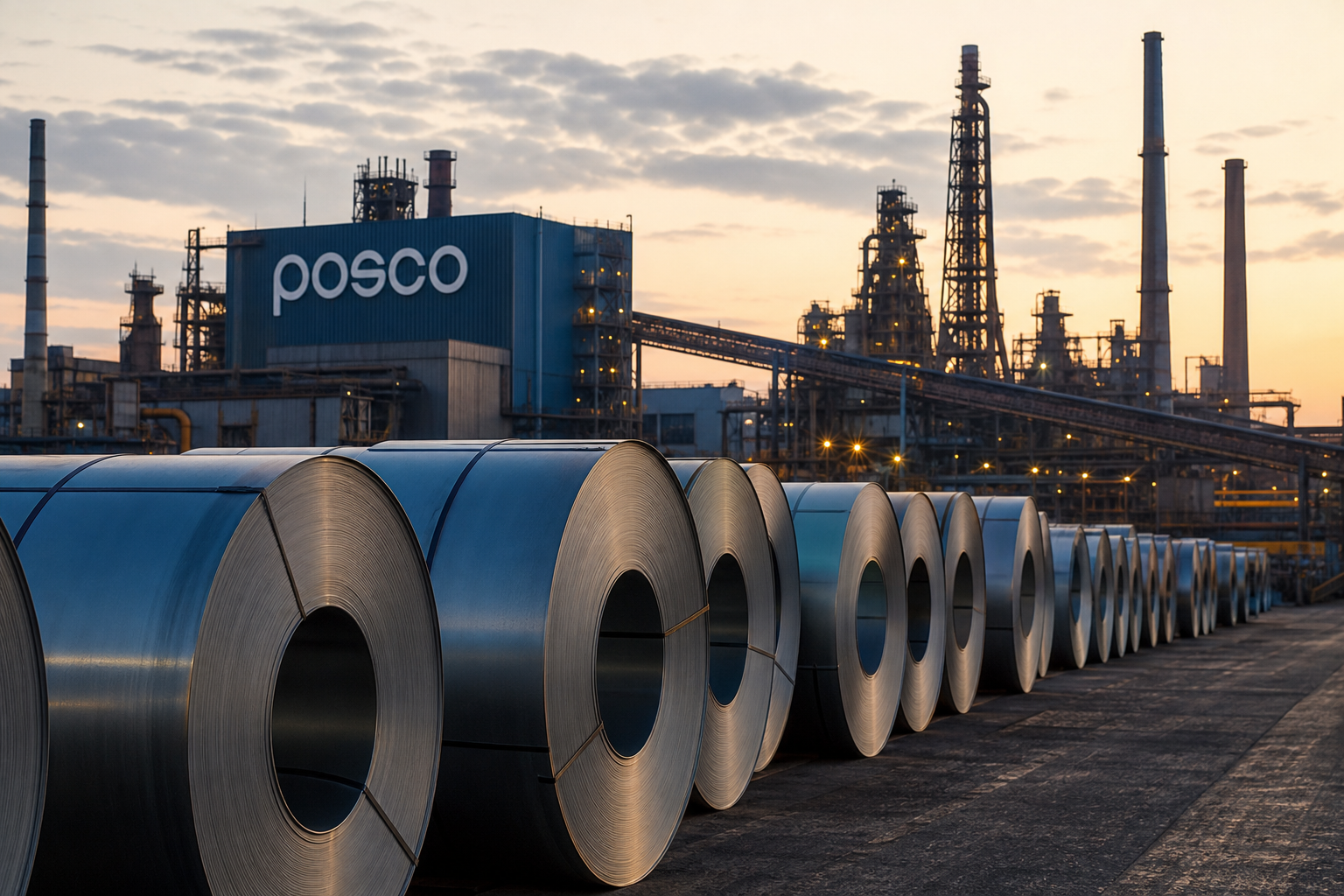
The US Commerce Department has revised and finalized the countervailing duty rate on POSCO heavy plate, following a ruling by the Court of International Trade (CIT). The decision reflects the court's finding that the Korean government's free allocation of carbon emission allowances constitutes a subsidy under US countervailing duty law. This shows that Korean steelmakers' response to carbon regulations can act as a trade barrier.
According to the US Federal Register on Nov. 5 (local time), the Commerce Department officially notified a correction to the results of the 2021 annual review of countervailing duties on carbon and alloy steel heavy plate from Korea. The notice will be formally published in the Federal Register on Nov. 6. The action directly reflects the final judgment issued by the CIT on Oct. 27.
The key issue is the nature of the additional carbon allowances (KAU) that the Korean government allocated free of charge to POSCO under the Korea Emissions Trading Scheme (K-ETS). Korea's system grants 90% of emission targets free of charge to covered companies, but provides an additional 10% to industries meeting certain requirements, supporting 100% free allocation. POSCO was included in this additional allocation.
The US Commerce Department defined this additional 10% free allocation as a financial contribution provided only to specific companies—that is, a subsidy subject to countervailing duties. POSCO and the Korean government argued it was merely part of an environmental regulatory scheme, not a subsidy, and sued the US government.
Initially, the Commerce Department interpreted it as an export subsidy tied to export performance. However, when the CIT ordered a review on the grounds that exports were not a mandatory requirement, the Commerce Department submitted a second recalculation based on the size of beneficiary companies.
The Commerce Department analyzed that 494 Korean companies received additional allowances in 2021, less than 0.1% of the 906,325 total companies in Korea. The logic is that because the beneficiaries are limited to a very small number, the subsidy has de facto specificity.
The CIT found the Commerce Department's second recalculation reasonable and gave final approval. POSCO argued that 494 out of 684 companies subject to the scheme received benefits, so they were not a minority, but the court accepted the Commerce Department's comparison method based on all companies.
The Commerce Department applied a subsidy rate of 0.61% to the additional allowances in accordance with the court ruling. Combined, POSCO's total countervailing duty rate for 2021 was finalized at 0.80%. This rate applies only to 2021 imports.
This decision sets a major precedent linking another country's carbon emission allowance system to US trade remedies. Following the Hyundai Steel countervailing duty case in 2025, the same conclusion was reached in the POSCO case, solidifying the legal basis for the Commerce Department's specificity determination.
※ This article is an AI translation of the Korean original published by Korea Credit News; it was checked by automated quality guards and published by the English edition desk.