

- Published 2026.11.10 02:54
Hanwha Momentum, Sunjae Hitech, Nine Tech win exclusive contracts
Equipment moving into Guangzhou T8 line; mass production set for Q4 2027
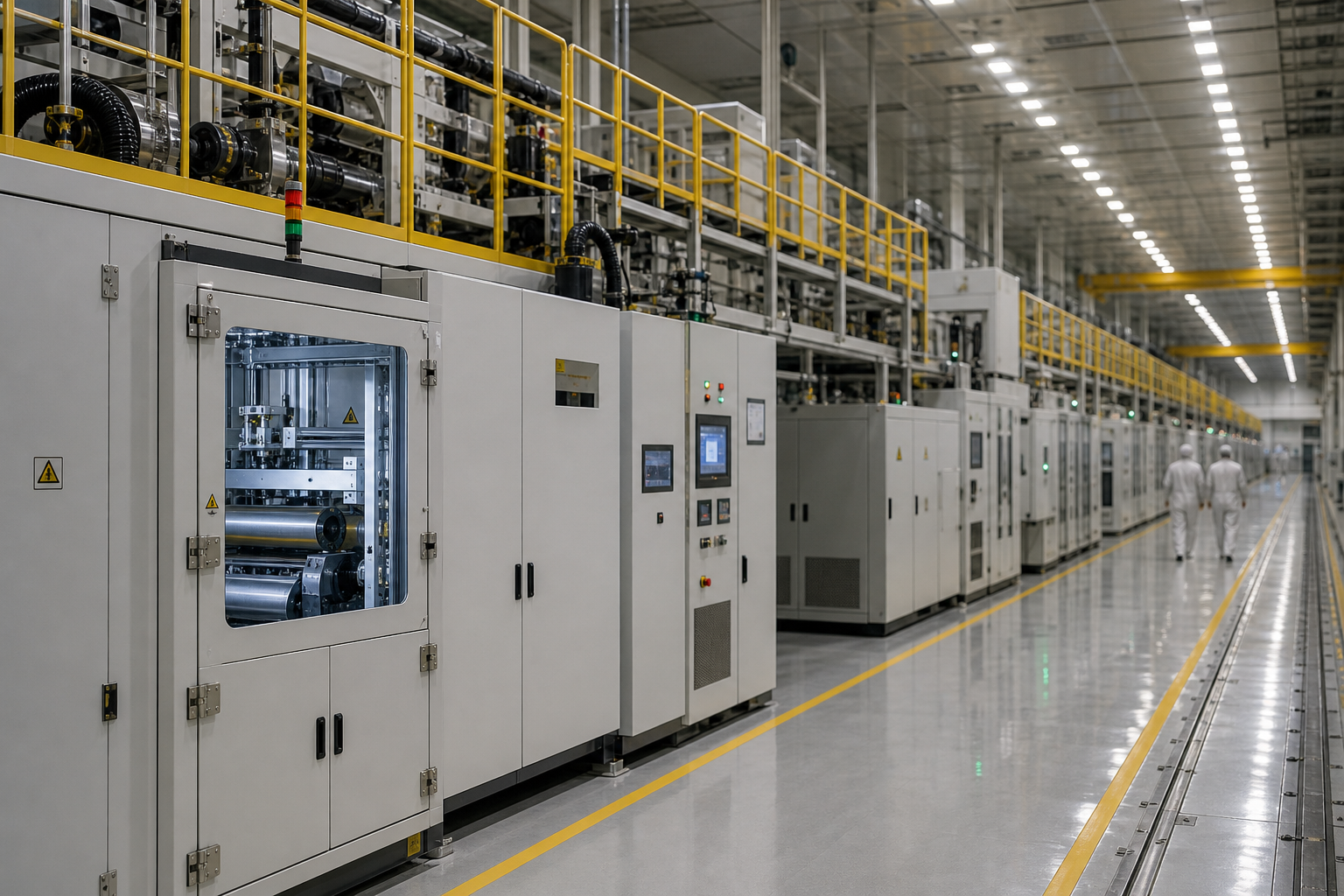
Korean equipment makers have won a raft of orders for core process equipment at TCL CSOT's 8.6-generation inkjet printing OLED line in China, the world's first such mass-production facility. The wins mark a technical validation for Korean companies in a next-generation display process and open up a new revenue source.
According to Chinese display industry media EE Times China on Nov. 10, Hanwha Momentum, Sunjae Hitech, Nanotech and Seyang Electronics were selected as exclusive suppliers of key equipment for TCL CSOT's Guangzhou 8.6G inkjet OLED project, known as T8. Bidding information platforms confirmed that these companies will handle major processes ranging from substrate transfer to heat treatment, inspection and cleaning.
Nine Tech signed a contract in June 2026 through LG Electronics to supply a vacuum nitrogen substrate processing system worth 25.4 billion won (about $19 million) for the project. The system maintains vacuum and nitrogen environments during substrate transfer in OLED manufacturing processes such as inkjet printing and thin-film encapsulation (TFE), preventing contamination of organic materials that are vulnerable to moisture and oxygen. An 8.6G substrate has 2.25 times the area of a 6G substrate, making precise transfer and environmental control essential.
Other equipment makers have also entered the supply chain with their respective specialties. Hanwha Momentum will supply thin-film transistor (TFT) heat treatment equipment, and Sunjae Hitech will supply X-ray annealing equipment. Nanotech and Seyang Electronics were reportedly named exclusive suppliers of dry endpoint inspection equipment and mask cleaners, respectively.
The T8 line that TCL CSOT is building in Guangzhou is an 8.6G (2,290 mm × 2,620 mm) inkjet printing OLED mass-production plant. It will have a monthly capacity of 22,500 substrates and aims to start mass production in the fourth quarter of 2027. The company recently completed construction of the factory building and has begun moving in core equipment to prepare for trial runs.
Unlike conventional processes that heat and deposit organic materials in a vacuum, inkjet printing sprays liquid organic materials directly onto desired positions on a substrate through nozzles. It offers higher material efficiency, which can lower manufacturing costs. TCL CSOT plans to use this process to produce mid-sized IT panels for laptops and monitors that require high resolution and low power consumption, moving beyond small panels for smartphones.
The Korean equipment makers' latest orders come amid a downturn in display investment. Market researcher Counterpoint Research expects global display equipment investment to fall 49% next year from this year. With new investment shrinking, Korean companies are responding by participating in limited projects and increasing the supply value of a single line.
"The 8.6G inkjet OLED is a next-generation platform with different requirements from conventional processes," said Park Geun-no, CEO of Nine Tech. "We will create growth opportunities based on our vacuum and precision transfer technologies."
(Dollar figures are approximate, converted automatically at 1,000 won = $0.735, the rate on Nov. 10, 2026.)
※ This article is an AI translation of the Korean original published by Korea Credit News; it was checked by automated quality guards and published by the English edition desk.