- Published 2026.11.02 10:12
Gangwon small business loans top 25 trillion won; personal rehabilitation filings soar
67.9% of new debt flows to non-bank lenders, sharply eroding credit quality
Time to stop simple maturity extensions and pursue bold debt restructuring

Debt among small business owners in Gangwon Province has crossed a critical threshold, with personal rehabilitation filings at local courts exploding. Despite warnings from the Bank of Korea, local governments and politicians have stuck to stopgap measures such as repayment deferrals and maturity extensions, structurally inflating the bad loans of marginal borrowers, critics say.
According to local legal and financial circles on Nov. 2, the Chuncheon District Court received 3,094 personal rehabilitation applications last year, surpassing 3,000 for the first time. That is a 72.1% surge from 1,798 in 2022. This year, 2,621 applications were filed through the end of September, with 1,278 concentrated in the four months from June to September, showing no letup in the increase. Personal rehabilitation is a court-approved program that requires a certain level of income. The surge clearly shows that even economic actors with relatively normal cash flows are being pushed to the brink.
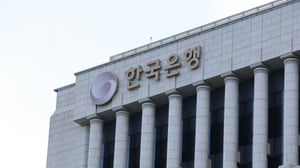
More serious is the rapid deterioration in borrowers' credit quality. According to an analysis by the Bank of Korea's Gangwon branch, self-employed business loans in Gangwon stood at 25 trillion won (about $18 billion) at the end of the first quarter of this year, up about 88% from 13.3 trillion won (about $9.8 billion) at the end of 2019, before the COVID-19 pandemic. In particular, the loan balance grew 9.1% from the end of 2024, the third-fastest pace among Korea's 17 cities and provinces.
The qualitative structure of the loans has reached its limit. Of the 11.7 trillion won (about $8.6 billion) increase in self-employed debt in Gangwon since the end of 2019, 67.9% flowed into non-bank lenders such as savings banks and mutual finance cooperatives. As a result, the share of non-bank lenders in total self-employed loans jumped from 36.0% at the end of 2019 to 51.0% at the end of the first quarter of this year, completely overtaking the banking sector. That is nearly 20 percentage points above the national average non-bank loan share of 32.9%. It means that small business owners who could not pass banks' stricter credit screening were pushed en masse into high-interest non-bank loans of around 10% per year.
Credit risk concentrated in vulnerable borrowers is already showing explosive numbers. Loans to vulnerable self-employed borrowers—those who are multiple-debt borrowers and in low-income or low-credit brackets—totaled 2.7 trillion won (about 14,000 people), and their delinquency rate soared to 16.44%. They have effectively entered a stage where normal credit management is impossible. In addition, the share of loans held by borrowers aged 60 or older, whose income recovery elasticity is markedly lower, expanded sharply from 22.2% at the end of 2019 to 37.3% at the end of the first quarter of this year. Elderly self-employed people who entered business for a living after retirement are unable to withstand principal and interest repayment pressure and are trapped in multiple debts.
Despite these signs of distress, the solutions offered by local governments and politicians lean toward symptomatic prescriptions such as short-term liquidity supply, loan extensions and repayment deferrals. Gangwon Province and its cities and counties have repeatedly called for low-interest refinancing and expanded repayment deferrals, but these are merely stopgap measures that artificially delay the confirmation of insolvency among marginal borrowers who cannot afford interest costs. Repeatedly providing repayment deferrals to cash-strapped small business owners only entangles their multiple-debt structures further and snowballs accumulated financial costs, ultimately creating a vicious cycle that raises loss rates for creditor financial institutions at the court rehabilitation or bankruptcy stage.
Gangwon's economic fundamentals also cannot support debt absorption. The construction industry, a key pillar of the regional economy, has entered a severe cooling period due to fallout from real estate project financing insolvencies, while face-to-face service businesses have lost their cash-generating ability amid sluggish domestic demand and weak consumption. With no rebound in the real economy in sight to support the debt, a structure that relies solely on financial support risks sinking the soundness of regional financial institutions as well. Failure to manage the soundness of non-bank lenders will inevitably lead to a credit crunch that halts new credit supply to small business owners in the region.
Ultimately, what is needed now is not life-support financial transfusions but sophisticated debt restructuring and bold structural adjustment. For merchants with recovery potential, effective principal reduction programs should be launched early, while for marginal business owners who have lost self-sustainability, a soft-landing path should be prepared that combines job transition and employment support so they can safely close their businesses and re-enter the labor market instead of being forced into reckless loan extensions. If the time bomb of bad debt is not dismantled in time and the debt is repeatedly rolled over, the entire regional financial system and local finances will face an uncontrollable credit shock.
(Dollar figures are approximate, converted automatically at 1,000 won = $0.738, the rate on Nov. 8, 2026.)
※ This article is an AI translation of the Korean original published by Korea Credit News; it was checked by automated quality guards and published by the English edition desk.