- Published 2026.11.09 11:09
Geopolitical conflicts force detours, sending ton-mile demand soaring
Container ships face heavy newbuild delivery burden, tankers have scrapping room
Korean shippers cut long-term charters and shore up finances to prepare
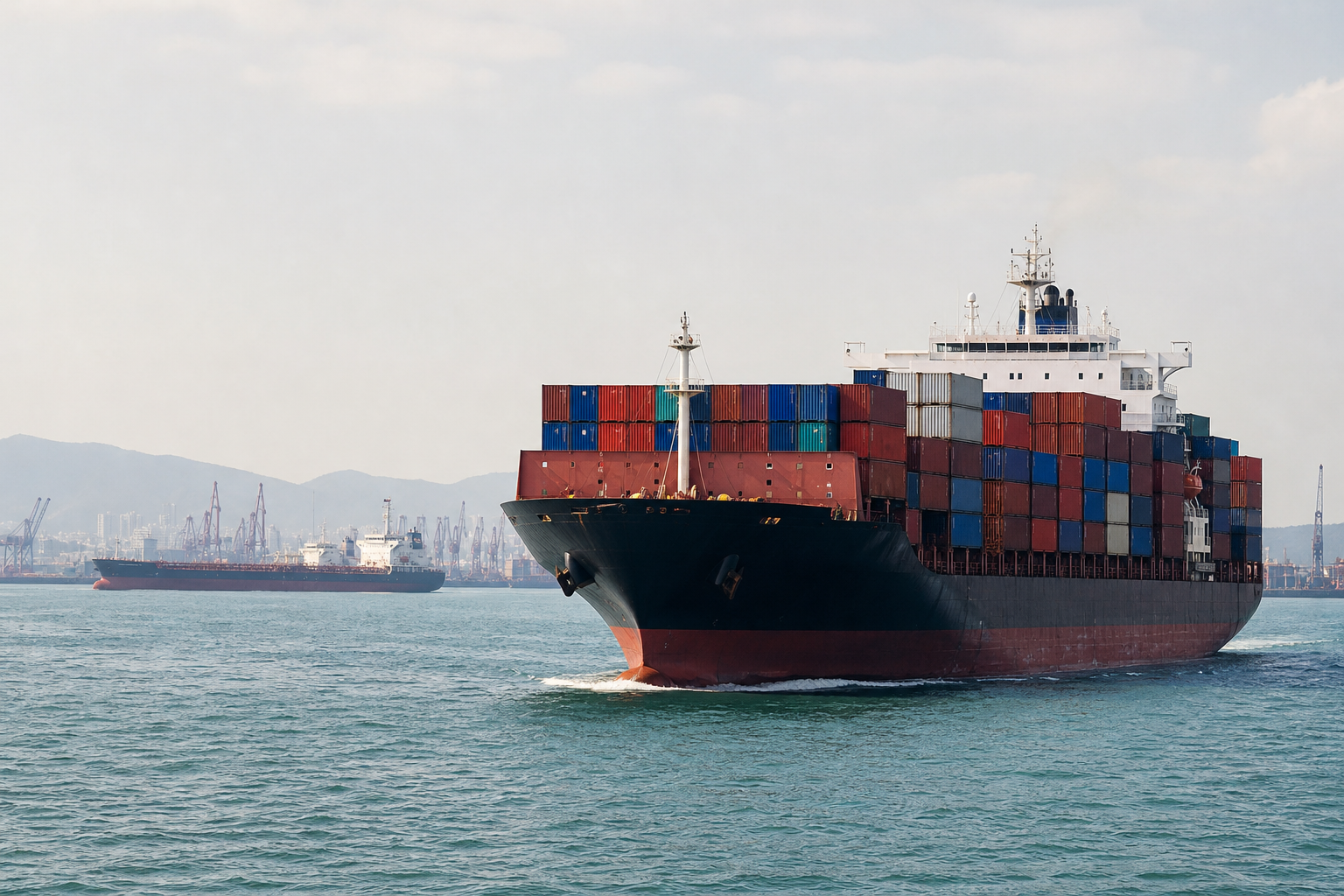
After the COVID-19 pandemic ended, the shipping industry was gripped by fears of a downcycle. But geopolitical conflict has turned that into an unexpected boom. The prolonged Red Sea crisis and this year's US-Iran war have forced vessels to take longer routes, increasing sailing distances. As effective capacity shrank, freight rates for major vessel types, which had been falling since the second half of 2024, rebounded and remain elevated.
However, analysts say the current rate strength rests on short-term factors. If geopolitical risks ease and routes normalize, pent-up newbuild deliveries will hit the market, creating wide supply-demand gaps across vessel types. Container ships are expected to face the heaviest supply pressure. Korean shipping companies, scarred by the last prolonged downturn, are strengthening their crisis response through fleet restructuring and financial improvements.
According to a NICE Credit Rating report on shipping market conditions and supply-demand outlook by vessel type released on Nov. 9, the recent freight rate strength depends heavily on detours caused by geopolitical conflicts and increased long-haul commodity trade rather than cargo volume growth itself. Tanker rates in particular have soared since the US-Iran war broke out this year, jumping more than ninefold from the end of 2025 to record historic highs. Over the same period, the Baltic Dry Index rose 45% and the Shanghai Containerized Freight Index climbed 139%.
Container ships are seen as the most vulnerable to future supply-demand shifts. The current increase in container transport distance, measured in TEU-miles, relies heavily on detours around the Cape of Good Hope on Asia-Europe routes. At the same time, the container ship orderbook equals 40% of the existing fleet, meaning massive newbuild deliveries are scheduled. With some global carriers recently showing signs of partially resuming Suez Canal transits, a combination of route normalization and newbuild deliveries could sharply increase effective capacity and worsen the supply-demand balance.
Bulk carriers, by contrast, are supported by structural growth in long-haul trade. Despite slowing steel production due to China's property slump, rising imports of long-haul raw materials such as Brazilian iron ore and Guinean bauxite are underpinning transport demand. NICE Credit Rating expects bulk carrier ton-mile demand to hold at a certain level even if short-term geopolitical risks ease. Even if fleet growth accelerates from 2027, supply pressure is expected to be more limited than for other vessel types.
Tankers are enjoying strong market conditions amid a reshaping of crude oil trade patterns and operational restrictions in the Middle East. Newbuild orders have expanded recently on the back of unusually high rates, increasing medium- to long-term supply pressure. But the large share of older, high-age vessels provides some room to adjust supply through scrapping if rates fall. Still, analysts say current high tanker rates would be hard to sustain if Middle East conflicts subside.
The massive restructuring that hit the shipping industry during the global financial crisis was driven largely by expensive long-term charter rates and excessive debt. Today, major Korean shipping companies are assessed to have built stronger financial buffers than back then through business portfolio diversification and large-scale capital increases.
HMM, Korea's largest container carrier, has sharply increased the share of owned vessels and reduced its charter dependence from 56% in 2016 to 18% this year. By building a fleet centered on ultra-large newbuilds, it has lowered the average vessel age to 6.9 years and secured cost competitiveness. After riding the previous supercycle, HMM grew its capital from around 1 trillion won (about $738 million) at the end of 2019 to 29 trillion won (about $21 billion) as of the end of June this year, while cutting its debt ratio from 556.7% to 28.4%.
Bulk carrier and tanker operators are also preparing for uncertainty through flexible fleet management and long-term shipping contracts. Pan Ocean, a bulk carrier, keeps long-term charters of one year or more at about 12% of its total chartered fleet so it can respond quickly to market conditions. Major bulk carriers such as H-Line Shipping, Polaris Shipping and Korea Line Corporation, along with tanker operator SK Shipping, have increased the share of revenue from long-term contracts with creditworthy shippers to reduce earnings exposure to freight rate swings.
The future performance of the shipping industry hinges on the accumulated newbuild supply and the trajectory of geopolitical conflicts. Key factors to watch include when the Red Sea and Suez Canal fully normalize and how quickly supply-side measures such as scrapping older vessels and slow steaming are implemented as newbuild deliveries accelerate. These will determine whether the shipping market achieves a soft landing.
(Dollar figures are approximate, converted automatically at 1,000 won = $0.738, the rate on Nov. 9, 2026.)
※ This article is an AI translation of the Korean original published by Korea Credit News; it was checked by automated quality guards and published by the English edition desk.