
- Published 2026.10.30 09:45
About 400 employees slated to leave keep their jobs, delayed salary installment payments postponed indefinitely
Six stores face power cutoffs over unpaid electricity bills, credit purchases of goods halted entirely
Accumulated unpaid wages become priority claims, a potential liability in future sale or M&A
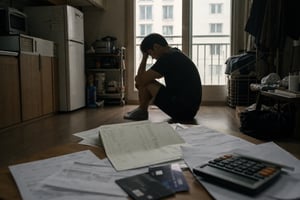
Homeplus, which is undergoing corporate rehabilitation, has abruptly withdrawn voluntary retirement processing for about 400 employees due to severe cash shortages. With even overdue salary payments postponed indefinitely and major stores facing power cutoffs over unpaid electricity bills, the company has hit a liquidity crunch that makes it difficult to handle even a normal business wind-down.
Homeplus notified voluntary retirement applicants on Oct. 29 that it was canceling the retirement process accepted this month, citing changes in business conditions. The voluntary retirement program, which began accepting applications on Oct. 7 without separate consolation payments, closed early on Oct. 14 amid employee anxiety. The company had originally planned to process retirements effective Oct. 31 and pay statutory severance, unpaid wages and Chuseok bonuses in a lump sum on Nov. 14. But it failed to secure even the minimum retirement settlement funds, forcing it to keep employment relationships unchanged.
The severity of the cash depletion is also evident in wage payments for current employees. The company announced on Oct. 23 that it would first pay 25% of overdue August wages in installments and pay the remaining 75% in full on Oct. 30, but abruptly postponed the payment indefinitely on Oct. 29, citing a lack of liquidity. The fact that it has no money even for the remaining installment, after already delaying wages, shows that its bank accounts are effectively empty.
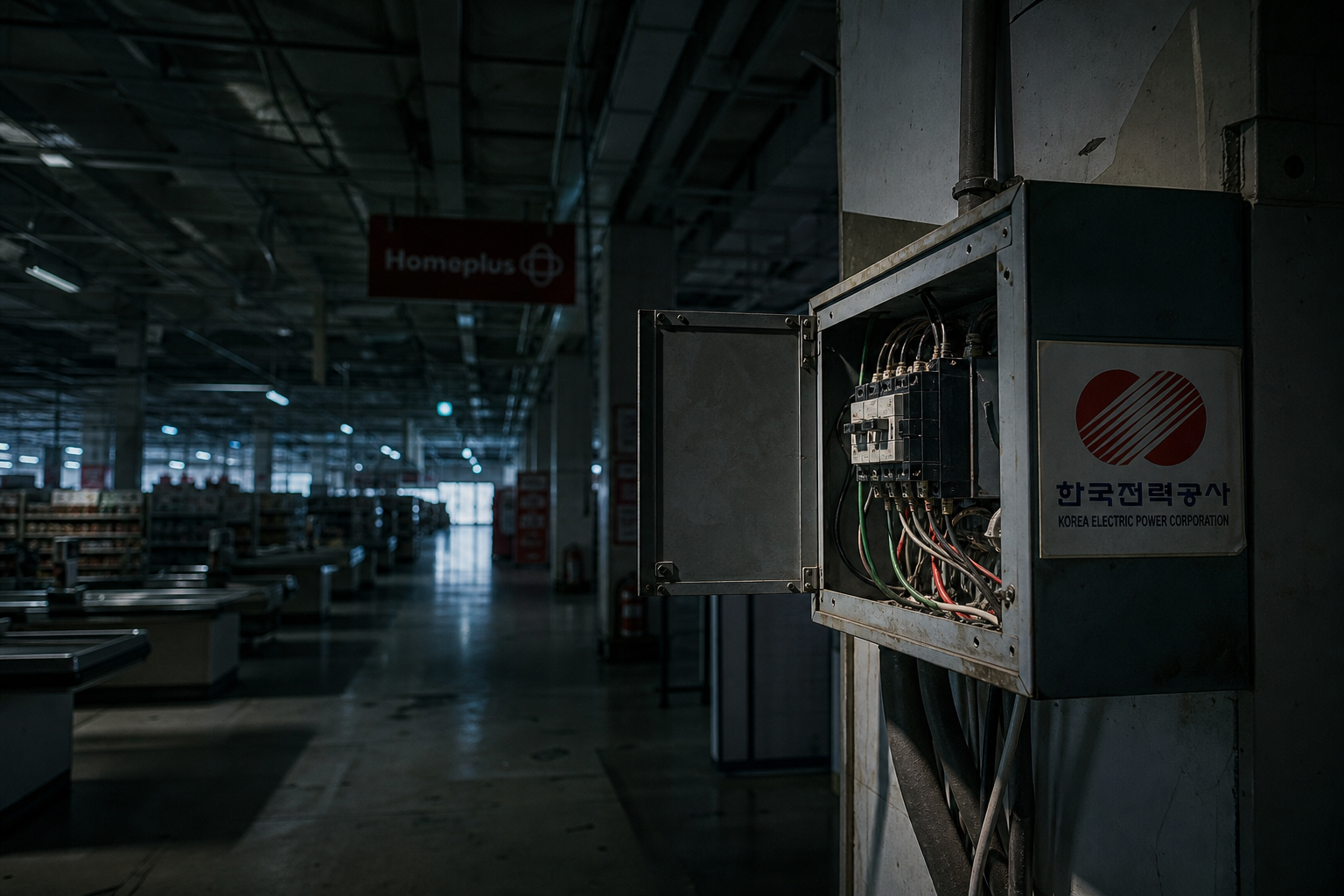
Even basic facility operations at stores are at risk of being cut off. Korea Electric Power Corp. has warned of power cutoffs at the end of this month for six stores — Pocheon Songwoo, Kintex, Goyang Terminal, Namyangju Jinjeop, Paju Unjeong and Gajwa — that have failed to pay electricity bills for months. The Incheon Songdo store is also on the list for a cutoff next month. Large discount stores require a stable power supply to run refrigeration and freezing equipment and maintain electronic payment systems. If power is cut, product distribution networks will be paralyzed and the livelihoods of tenant store owners will also be hit. As of early this month, Homeplus store revenue had reportedly plunged to around 30% of targets.
This extreme liquidity squeeze stems from deteriorating trading conditions caused by a loss of credit. Partner companies, worried about not being paid for deliveries, are halting existing credit purchases and demanding cash payments or advance payments. Even after raising 200 billion won (about $148 million) in emergency operating funds in July 2026, the company's credit has not recovered, forcing it to pour out cash every time it buys goods, and the ammunition needed for essential fixed costs has rapidly run out.
Canceling retirement processing is only a stopgap to avoid one-off payouts in the short term, but it becomes a fatal obstacle to the long-term rehabilitation process. Workforce reductions at marginal firms are usually a precondition for lowering monthly fixed costs and ensuring the feasibility of rehabilitation plans. But Homeplus lacks the funds to cover the one-off settlement costs that accompany reductions, trapping it in a contradiction where it cannot reduce future labor cost burdens and must continue to shoulder monthly wage debts.
Under the Labor Standards Act, severance pay and overdue wages are classified as priority claims that are paid before general rehabilitation claims in rehabilitation proceedings. If wages for employees who were denied retirement continue to accumulate as priority claims, they will act as a massive potential liability that makes prospective buyers hesitate in future sale or M&A processes. With no clear progress on the sale itself, whether the company can overcome the power cutoff crisis and come up with self-rescue measures to resolve priority claims has emerged as a key variable that will determine between rehabilitation termination and forced liquidation scenarios.
(Dollar figures are approximate, converted automatically at 1,000 won = $0.738, the rate on Nov. 8, 2026.)
※ This article is an AI translation of the Korean original published by Korea Credit News; it was checked by automated quality guards and published by the English edition desk.