- Published 2026.10.26 10:54
LNG costs up 46.4% but rates frozen, hitting earnings
Direct imports by large firms top 40%, eroding industrial demand
Fuel cell investment offers a hedge, but unit price defense is key
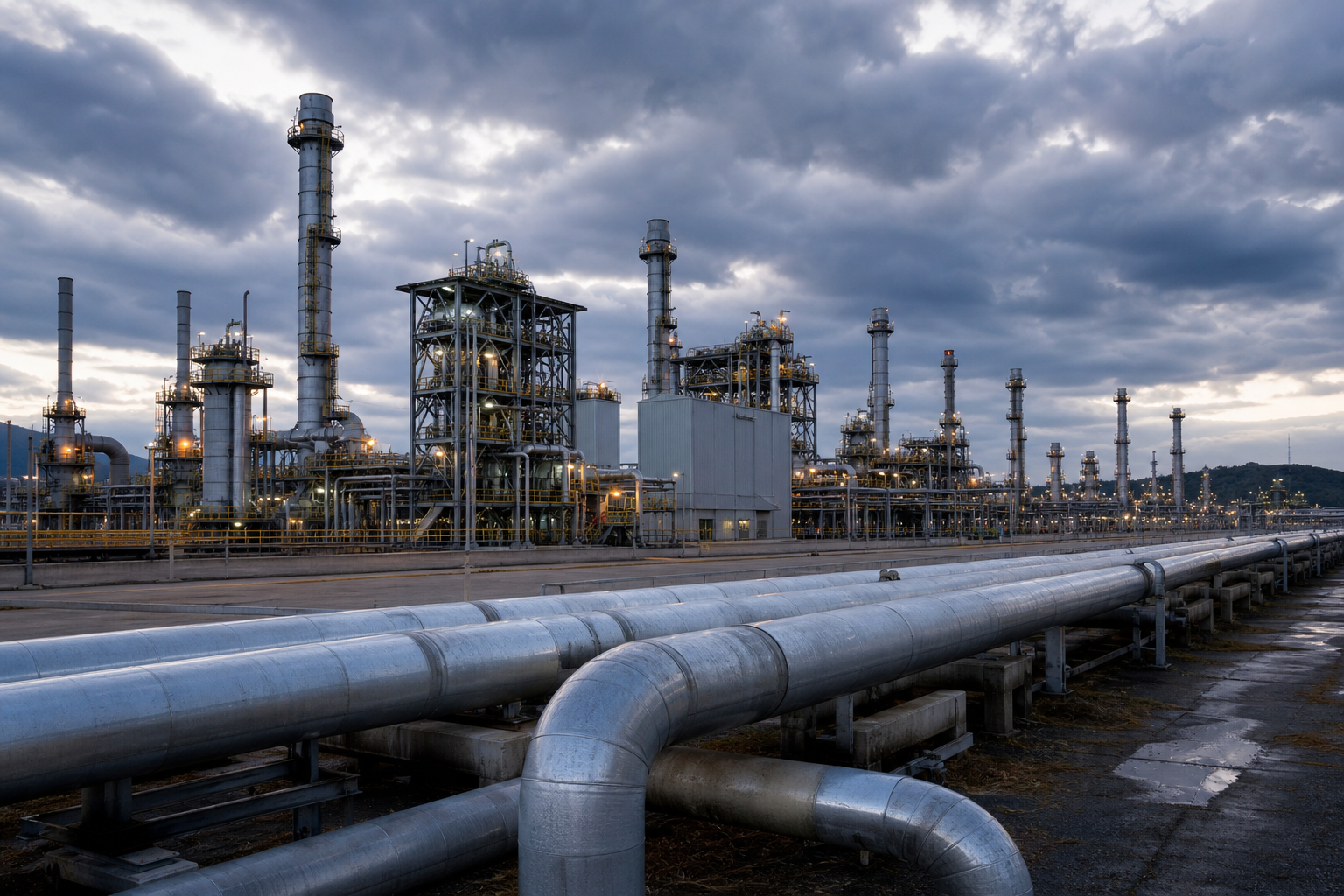
Profitability in Korea's city gas industry is flashing red as household rates remain frozen despite a surge in international liquefied natural gas (LNG) prices. Adding to the pain, large corporate manufacturers—the industry's biggest customers—are increasingly importing natural gas directly, shaking the traditional monopolistic demand base.
According to a report released by NICE Credit Rating on Oct. 26, Korea's LNG import price jumped 46.4% from $507.5 per ton in February to $743.2 in August in the wake of the U.S.-Iran war that broke out in February. Over the same period, the government froze wholesale rates for residential use, citing price stability, and raised industrial wholesale rates by only 38.6%. With retail rates accounting for just about 7% of total rates in Korea's revenue structure, the cost burden on city gas companies is mounting rapidly.
Korea's city gas industry adopts a fuel cost pass-through system that reflects raw material cost changes in rates, but actual application occurs with a time lag. In particular, unlike commercial rates, residential rates are highly rigid and often cannot be raised in a timely manner. As of September, raw material costs accounted for about 72% of Korea's city gas rates, higher than the European Union average of 52%, while supply costs—directly tied to actual profits for city gas companies—remained at around 19%. This structure means international price shocks immediately translate into earnings hits. In fact, right after the Russia-Ukraine war in 2022, city gas companies' combined operating margin (EBIT/revenue) fell from around 3% to 1.7% because they could not immediately reflect the surge in costs in rates.
More structurally painful than the cost burden is the loss of industrial gas demand, the biggest source of revenue. Major alternatives for energy-intensive industries include liquefied petroleum gas (LPG), bunker C oil, and direct imports of natural gas. Among these, direct imports—led mainly by large corporate manufacturers—soared from around 10% in 2010 to 40% in 2025. The petrochemical industry, the largest demand source, is cutting production due to oversupply and restructuring, and even the increase in natural gas consumption for self-generation is mostly met by direct imports, leaving city gas companies with shrinking room.
With growth stalled, city gas companies are seeking a way out through investment in fuel cell power generation. City gas supply for fuel cells surged about 7.6-fold from 198 million cubic meters in 2019 to 1.494 billion cubic meters in 2025, emerging as a new demand source accounting for 6.1% of total supply. Major players such as Samchully and Seoul City Gas are steadily increasing equity investments in fuel cell power plant special purpose companies (SPCs), leveraging their existing pipeline networks.
On the other hand, electrification is emerging as a mid- to long-term threat in the residential heating market. While major European countries are phasing out fossil fuel heating and subsidizing heat pump installations, the Korean government also plans to deploy 3.5 million heat pumps by 2035. In the short term, city gas holds a firm advantage in the residential heating market, but as alternative devices spread, downward pressure on demand will grow.
The new fuel cell power business also faces the hurdle of proving solid profitability. Since the introduction of the hydrogen power bidding market in 2023, electricity sales prices have been falling, but gas prices—the main input—have not fallen enough, leading to capital erosion and impairment of investment stakes at some sites. Ahead of this winter, the key indicators for the survival of the city gas industry will be how far the government allows residential rate normalization, and whether companies can defend against the expansion of direct imports and secure fuel cell generation unit prices to build fixed margins.
※ This article is an AI translation of the Korean original published by Korea Credit News; it was checked by automated quality guards and published by the English edition desk.