
- Published 2026.10.10 10:41
CATL secures 26,574 patents to become global No. 1
Sweeps next-generation battery fields, threatening Korea's innovation leadership
Beyond volume, commercializing next-gen form factors is the survival test
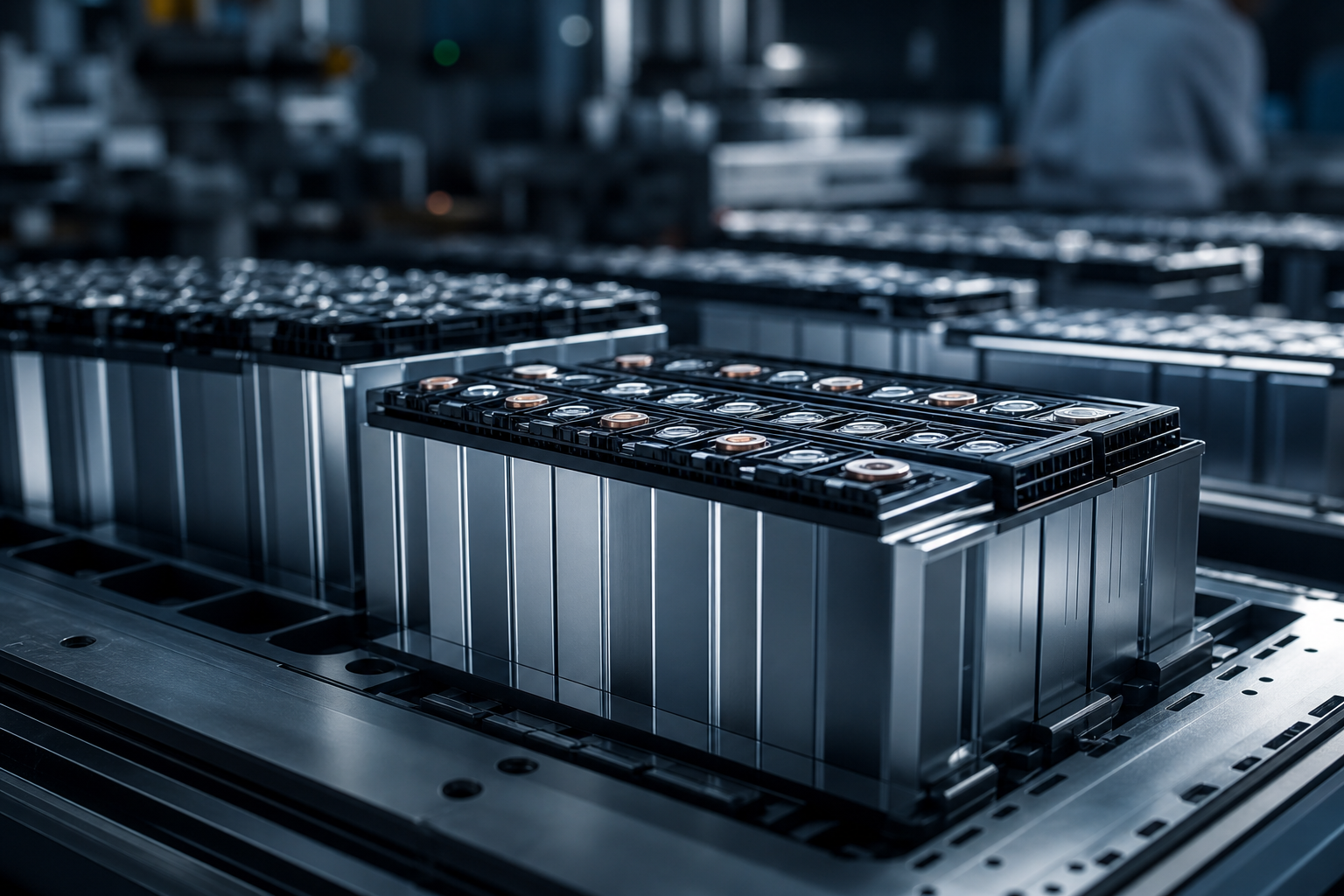
China's CATL has overtaken LG Energy Solution to become the world's No. 1 in battery patent families over the past decade. It has swept the lead not only in EV traction batteries but also in all-solid-state batteries, fueling analysis that the center of global battery innovation is shifting to China.
According to data from global patent database PatSnap on Oct. 10, CATL secured 26,574 simple patent families over the 10 years from October 2016 to September 2026, ranking first in the world. LG Energy Solution, which had long held the top spot, slipped to second with 22,597, trailing by about 3,900.
This is the first time a Chinese battery company has taken the global No. 1 spot in 10-year cumulative patent counts. CATL was found to lead not only in total cumulative patents but also in all three key dimensions: traction batteries, all-solid-state batteries, and others. Other Chinese manufacturers such as EVE, SVOLT, Gotion, and BYD are also firmly in the top 10, increasing their share.
The SMM statistics were first shared on Oct. 9 on a battery industry account on LinkedIn, a business networking site, sparking authenticity disputes, but were later officially confirmed through major economic media and SMM's own channels. SMM is seen as having released the analysis ahead of an industry event in Chengdu, China on Oct. 15-16.
This patent reversal clearly shows that the technological edge enjoyed by the Korean battery industry is being threatened on all fronts. Korean companies have led the premium market centered on high-nickel ternary batteries, but China has expanded its share with cheap lithium iron phosphate (LFP) batteries and is rapidly extending into next-generation technologies such as sodium-ion and all-solid-state batteries.
As the global EV demand slowdown lengthens, the weaponization of patents is intensifying. Latecomer battery makers or automakers lacking technology development capacity are seeking to license leading companies' technologies as packages. Chinese companies that succeeded in quantitative expansion can now use patents as barriers to block latecomers' entry and earn additional technology licensing revenue.
However, a quantitative increase in patent applications does not immediately translate into overwhelming commercialization competitiveness. The proportion of patents that are actually applied in mass production and create commercial value varies. For patents registered at the pre-research stage to become market standards, they must go through arduous mass-production verification processes such as securing yield and reducing manufacturing costs.
In response, the Korean battery industry is betting on form factor diversification and next-generation material technologies. The strategy is to defend market dominance by expanding the portfolio, including mass production of 46-series cylindrical batteries and application of silicon anode materials.
Ultimately, the real outcome depends on when and in what form the flood of patents is actually installed in finished vehicles. The results of intellectual property defense in the global market against the patent offensive, the speed of stabilizing mass-production yields during major form factor transitions, and the commercialization timing of next-generation technologies such as all-solid-state batteries are expected to be the practical indicators that will determine the future market landscape.
※ This article is an AI translation of the Korean original published by Korea Credit News; it was checked by automated quality guards and published by the English edition desk.