- Published 2026.10.06 11:30
Full shift to contract market under 2030 solar goal of 87GW
Setback distance rules eased, but low-cost Chinese products dominate private market
Slow grid expansion and contract rules to be set next year will determine results
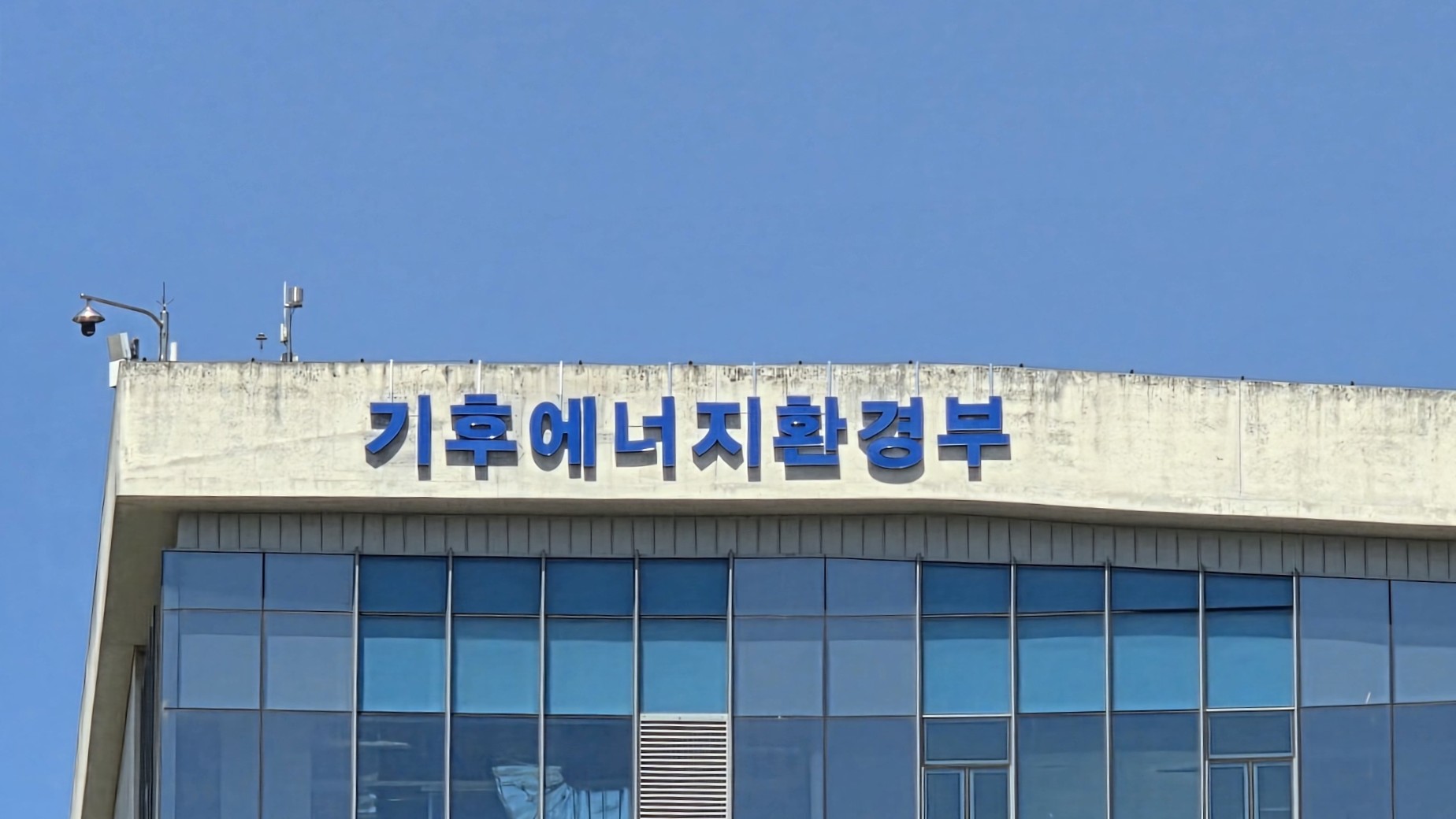
The Korean government is overhauling its support system with a target of deploying 87GW of solar capacity by 2030. Under the first renewable energy master plan established in May 2026 and the revised Act on the Promotion of the Development, Use and Diffusion of Renewable Energy, whose enforcement decree took effect on Sept. 18, the renewable portfolio standard (RPS) that had been in place for 15 years will be replaced in January 2027 by a government-led long-term fixed-price contract market. Setback distance regulations that had restricted solar sites have also been significantly relaxed. However, with the onslaught of low-cost Chinese modules and a prolonged shortage of transmission capacity, it remains uncertain whether the benefits of the enlarged solar market will fully reach the domestic industrial ecosystem.
The Ministry of Climate, Energy and Environment's first renewable energy master plan centers on deploying 100GW of renewable energy by 2030 and achieving a 30% share of power generation by 2035. Of this total, 87GW, or 87%, has been allocated to solar power, which has shorter permitting and construction periods. This is 3.5 times faster than the average pace of new capacity additions over the past two years.
The biggest change is the abolition of setback distance regulations, which had increased market uncertainty. Regulations that had been operated differently by 129 of 228 local governments were in principle banned through the enforcement decree last month, with exceptions allowed only up to 200 meters from residential areas. This opens up previously constrained potential sites and lays the groundwork for a significant increase in total solar deployment.
A structural change in the deployment system follows. The existing RPS determined mandatory supply based on generation volume, limiting policy management, and settlement costs for compliance ballooned to about 4 trillion won (about $3 billion) in 2024. The contract market that will replace it is a system in which the government sets bidding volumes based on facility capacity and enters into long-term fixed contracts.
However, falling contract prices will pressure the profitability of power generators. The government plans to lower solar contract prices from 150 won per kilowatt-hour (kWh) this year to 100 won in 2030 and 80 won in 2035. To address margin concerns, the government has proposed raising the limit on rent reductions for state-owned property to 80% and providing 294 billion won (about $217 million) in budget support for solar on industrial complexes and factory rooftops, but the impact on individual operators will inevitably vary depending on generation efficiency and capital financing structures.
It is also difficult to assert that the enlarged market will directly translate into improved earnings for the domestic solar value chain. Due to the dominance of low-cost imports, the domestic market share of Korean-made modules has plunged from 72.5% in 2018 to 41.6% in 2024. Chinese products account for 98% of imported modules.
Domestic manufacturers in the midstream (cells and modules), such as Hanwha Solutions and HD Hyundai Energy Solutions, are pinning hopes on the government's domestic preference policies. Korean companies are advantaged in the so-called 'graded market' due to mandatory use of domestic modules and inverters in public projects and the carbon certification grading system. But the graded market accounts for only 30% of the total solar market. In the 70% 'ungraded market' where price competitiveness is paramount, it is difficult to narrow the gap with low-cost Chinese products. There is a limit in that they must prove competitiveness beyond price by improving generation efficiency and quality through next-generation R&D investment such as tandem cells.
In contrast, downstream companies involved in development, engineering, procurement and construction (EPC), and operation and maintenance (O&M) are expected to benefit relatively clearly. This is because they rely heavily on domestic labor and facilities, making them difficult to replace with foreign companies. Operators with bidding track records, such as SK Eternix, Haezoom, which engages in construction and virtual power plant (VPP) businesses, and Enerdot, are expected to capture the fruits of market expansion.
Ultimately, the success of the 87GW solar era depends on securing transmission capacity to carry the generated electricity and on the specific operation of the system. Grid bottlenecks, where transmission line expansion cannot keep pace with the growth in generation facilities, are the greatest risk threatening the entire value chain. The government is pursuing an ultra-high-voltage direct current (HVDC) project connecting the Honam region and the Seoul metropolitan area, but the first phase is scheduled for completion in 2031, so transmission constraints are bound to persist in the medium term.
To compensate for these physical limitations, the spread of virtual power plants that integrate solar generation with energy storage systems (ESS) is being promoted. If the renewable energy bidding system currently being piloted in Jeju is expanded nationwide, VPP brokerage operators can enjoy economies of scale. However, the timing and method of the nationwide expansion have not yet been finalized, leaving uncertainty in the related industry.
Above all, actual investment decisions by power generators and construction companies are expected to gain momentum only after the detailed standards for the contract market system, slated for implementation in January next year, are finalized. How the new contract market rules are refined and whether additional measures to alleviate the prolonged grid bottleneck will follow are key criteria for judging the effectiveness of this renewable energy policy change.
(Dollar figures are approximate, converted automatically at 1,000 won = $0.738, the rate on Nov. 9, 2026.)
※ This article is an AI translation of the Korean original published by Korea Credit News; it was checked by automated quality guards and published by the English edition desk.