- Published 2026.10.05 10:05
Labor Institute survey: 78% of small business owners say they will cut employment conditions
Worries that soaring labor costs could hit savings bank delinquency rates if self-employed go bankrupt despite profits
Tasks include phased introduction considering margins by industry and resolving policy mismatch with tax support
As the Korean government and the National Assembly push to fully extend the Labor Standards Act to small workplaces with fewer than five regular employees, a sense of crisis is mounting among the self-employed and the financial sector. Critics point out that if massive labor cost burdens are added to small business owners already driven to the brink by weak domestic demand and prolonged high interest rates, it could lead not only to mass closures but also to the spread of bad loans among the self-employed, which approach 1,100 trillion won (about $812 billion), across the non-bank lending sector.
According to a fact-finding report prepared by the Korea Labor Institute at the request of the Ministry of Employment and Labor, an in-depth survey of small business owners found that 78% of respondents—32 people—said they would reduce employment conditions such as layoffs or shorter working hours if the Labor Standards Act were expanded. Workforce reductions were the most common response at 39%, followed by the use of ultra-short part-time work split into less than 15 hours per week at 20%. Only 17% of business owners said they would accept the law without any particular response.
The current Labor Standards Act excludes workplaces with fewer than five employees from key provisions such as the 52-hour workweek, overtime, night and holiday premium pay, paid annual leave, and restrictions on unfair dismissal. The government is pursuing full application of these rules to protect vulnerable workers, but small business owners on the ground say it is an unbearable cost shock.
Of the 2,105,000 or so businesses in Korea, workplaces with fewer than five employees number about 1,324,800, accounting for 62.9% of the total. The number of workers employed at these businesses is estimated at 3,178,000. According to the researchers' estimates, applying only the overtime premium pay provision to these small workplaces would generate additional annual labor costs of 1.35 trillion won (about $996 million).
In the lodging industry, where 24-hour shift work is essential, the monthly pay for a night-shift employee would surge from around 3 million won to between 4 million and 5 million won when premiums are added, completely eroding operating profit. There are also strong concerns that in retail and wholesale businesses such as restaurants and bakeries, where it is difficult to secure replacement workers, daily operations could be paralyzed if annual leave or dismissal restrictions are applied.
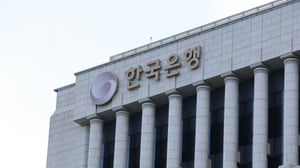
The financial sector's biggest worry is that this labor cost shock could destroy the repayment capacity of the self-employed and act as a time bomb threatening the soundness of the financial system. According to Bank of Korea statistics, the total outstanding balance of self-employed loans from financial institutions this year reached an all-time high of 1,095.5 trillion won (about $808 billion). The amount overdue by more than one month also exceeded 22.3 trillion won (about $16 billion), the highest level since statistics began. The overall delinquency rate on self-employed loans soared to 2.04%, the highest in 10 years and 9 months.
In particular, serious red flags are already flashing in the soundness indicators of non-bank lenders such as savings banks, mutual finance cooperatives, and specialized credit finance companies. The balance of individual business loans at savings banks plunged by about half from 24.2 trillion won (about $18 billion) at the end of 2022 to around 12.6 trillion won (about $9.3 billion) due to strengthened risk management. But while the loan volume shrank, the delinquency rate on individual business loans at savings banks skyrocketed 3.6 times from 3.31% to 11.94%. The ratio of substandard-or-below loans (NPLs), meaning bad loans overdue by more than three months, reached 15.69%, putting about 160,000 won out of every 1 million won lent at risk of being effectively unrecoverable.
On top of this, the vulnerability of multiple-debt borrowers who have borrowed up to their limits from several financial companies is at an extreme. The outstanding loan balance of self-employed multiple-debt borrowers who have taken loans from three or more financial institutions amounts to 645 trillion won (about $476 billion), with an average balance of 390 million won per borrower. Most of these borrowers are barely rolling over interest with their monthly operating profit. If additional fixed labor costs arise in this situation, self-employed people will head straight into marginal bankruptcy, and when business owners who cannot repay file for bankruptcy or individual rehabilitation, non-bank lenders will have to absorb the credit losses in full.
Distortions contrary to the policy intent are also appearing within the labor market. The 'split part-time jobs' that became common after the sharp rise in the minimum wage are becoming further entrenched amid discussions on expanding the Labor Standards Act, and the quality of workers' jobs is actually worsening. As the number of ultra-short-term workers working less than 15 hours per week surges and more stores convert to family-run operations, livelihood jobs for ordinary people are structurally disappearing.
The policy mismatch between financial and labor authorities is also a major challenge to resolve. The Financial Services Commission is pouring out debt restructuring support such as cleaning up bad loans through the New Start Fund, interest rate reductions, and maturity extensions to prevent the spread of delinquency among the self-employed. But if high-intensity cost regulations that destroy the basic income structure of the self-employed are introduced all at once in the labor policy area, the effectiveness of financial support measures will inevitably be halved.
Ultimately, precise speed control that comprehensively considers the payment capacity of workplaces with fewer than five employees and the soundness of the financial market is expected to determine the success or failure of the policy. To preserve the cause of protecting vulnerable workers while preventing side effects, a phased introduction of legal provisions according to profit margins by industry and the degree of smallness is required. In addition, a comprehensive livelihood financial safety net—including tax support to cushion the labor cost shock when the law is revised and customized low-interest refinancing loans linked to preventing rapid credit withdrawal by financial institutions—must come first to prevent a chain of insolvencies among the self-employed and non-bank lenders.
(Dollar figures are approximate, converted automatically at 1,000 won = $0.738, the rate on Nov. 9, 2026.)
※ This article is an AI translation of the Korean original published by Korea Credit News; it was checked by automated quality guards and published by the English edition desk.