
11. 09
(Mon)
Economy list
37 articles-

Shipping boom defies forecasts, but normalization will split fortunes by vessel type
Geopolitical conflicts have driven an unexpected shipping boom, but analysts warn that route normalization and newbuild deliveries will create sharp supply-demand divergences by vessel type, with container ships most at risk.
-

Living-cost credit loans push vulnerable borrowers to the edge, raising financial sector default risks
Credit loans taken by the bottom 20% of Korean households by assets and income are increasingly used for living expenses rather than investment, with the share hitting a record 45.3% last year. This consumption-driven debt is becoming a potential default risk for financial institutions, requiring we
-
Non-ferrous metals ride AI demand wave, but debt burden grows amid China decoupling
Korean non-ferrous metal firms are expanding US investments to capitalize on AI-driven demand and non-China supply chains, but heavy borrowing and geopolitical risks loom.
-

Gangwon self-employed drown in debt as personal rehabilitation filings surge
Personal rehabilitation filings in Gangwon Province have surged past 3,000 as self-employed debt tops 25 trillion won, with 67.9% of new loans flowing to non-bank lenders and delinquency rates among vulnerable borrowers hitting 16.44%.
-
Vulnerable self-employed delinquency rate tops 12%... credit polarization fuels hidden bad debt
Delinquency rates for vulnerable self-employed borrowers in Korea have surged past 12%, far exceeding ordinary household levels, as credit polarization pushes low-income, low-credit borrowers out of mainstream finance and into distress.
-
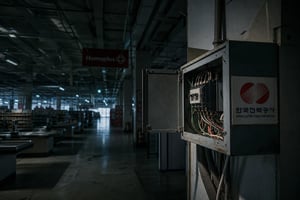
No cash even for severance pay…Homeplus abruptly withdraws 400 voluntary retirements
Homeplus abruptly withdrew voluntary retirements for about 400 employees due to severe cash shortages, postponed overdue wage payments indefinitely, and faces power cutoffs at six stores over unpaid electricity bills. Accumulating unpaid wages as priority claims could become a major liability in any
-
Lotte Fine Chemical Q3 operating profit falls 64.5% on quarter to 22 billion won
Lotte Fine Chemical's third-quarter operating profit fell 64.5% on quarter to 22 billion won, while cumulative nine-month operating profit more than doubled to 116.5 billion won.
-
SME policy loan delinquency tops 2% as maturity-extension illusion ends
Delinquency on Korean SME policy loans has surpassed 2% for the first time in five years as COVID-era maturity extensions expire, with bank SME delinquency also at a near 10-year high. Calls are growing for stricter screening and effective debt reduction to prevent losses from spreading to the broad
-

Korea Federation of Credit Guarantee Foundations sells 37.9 billion won in NPLs to defend against surging subrogation
The Korea Federation of Credit Guarantee Foundations and three regional foundations will sell 37.9 billion won in long-term NPLs to the Sae Dotagim Fund on Oct. 29 to ease subrogation burdens and improve soundness, but the measure has limits in absorbing new distressed loans.
-

Rate freeze and direct imports squeeze city gas profitability
Korea's city gas industry faces a profitability squeeze as frozen household rates and rising direct imports by large manufacturers erode its traditional demand base, with fuel cell investment emerging as a key strategic response.
-

Bank delinquency rate hits 10-year high; new bad loans double cleanup volume
Korean banks' won loan delinquency rate hit 0.69% in August, the highest in nearly 10 years, as new bad loans of 3 trillion won doubled the 1.5 trillion won cleaned up. Delinquencies are spreading from SMEs to large companies and households, raising concerns over banks' capacity to handle bad debt a
-

Korean Air-Asiana merger to face 1 trillion won integration costs before route gains
Korean Air and Asiana Airlines will face up to 1 trillion won in integration costs and fleet complexity before realizing fare and efficiency gains from their December merger, NICE Credit Rating said.
-
Sono Trinity Chairman Suh Joon-hyuk Meets Nghe An Party Secretary in Vietnam
Sono Trinity Group has been offered tourism cooperation in Vietnam's Nghe An Province, including a beach resort complex, and Chairman Suh Joon-hyuk said he would actively consider participating.
-
Elderly borrowers pushed to non-bank lenders as delinquency rates double
Elderly vulnerable borrowers in Korea hold the highest per-capita debt and are increasingly concentrated in high-interest non-bank loans, with delinquency rates doubling. The BOK data shows urgent need for tailored debt relief as rate hikes bite.
-

Short-term funding tilt grows as asset-backed securities top 40 trillion won, a 2026 high
ABS issuance hit a 2026 monthly high of 40.7 trillion won in September, led by time deposit and PF securitization, but shrinking MMF demand is expected to push short-term rates higher and raise refinancing costs for banks and builders.
-

CATL tops battery patents with 26,574, overtaking LG Energy Solution
CATL has overtaken LG Energy Solution as the world's top battery patent holder with 26,574 patent families over the past decade, signaling a shift in innovation leadership to China. Korean companies are responding with form factor diversification and next-generation materials.
-
Climate ministry expands solar target to 87GW, but grid bottlenecks and Chinese imports loom
Korea aims to deploy 87GW of solar by 2030 under a new contract market, but grid bottlenecks and cheap Chinese modules threaten domestic industry benefits.
-
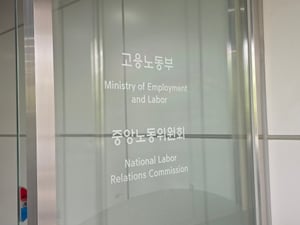
Government pushes full Labor Standards Act expansion to under-5 workplaces, but could it detonate 1,095 trillion won in self-employed loans?
The government's push to fully apply the Labor Standards Act to workplaces with fewer than five employees could trigger mass closures and spread bad loans among the self-employed, whose debt has reached 1,095.5 trillion won, with non-bank lenders already showing severe asset soundness deterioration.
-
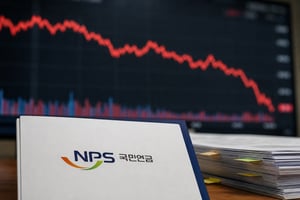
NPS lost 181 trillion won in a month: how to shed its bloated Korean stock holdings amid rebate deferral controversy
The National Pension Service lost over 181 trillion won in July as its deferred rebalancing and increased Korean stock holdings backfired in the market crash, sparking debate over government influence and fund governance ahead of the parliamentary audit.
-

New Leap Fund burns 1.6 trillion won of debt; bets on asset tracing ahead of relief for ordinary borrowers
The New Leap Fund wrote off 1.5968 trillion won of long-term delinquent debt for 183,000 vulnerable borrowers, bringing cumulative relief to 3.8551 trillion won. From Q4, it will use new asset tracing powers to extend relief to ordinary borrowers while tightening screening to curb moral hazard.